
 English
  日本語
日本語  Deutsch
  Español




What Is High Borosilicate Glass? Key Properties, Uses, and Buying Tips
Content
- 1 What Defines High Borosilicate Glass?
- 2 Physical and Chemical Properties of High Borosilicate Glass
- 3 How Is High Borosilicate Glass Manufactured?
- 4 Why Borosilicate Glass Is Preferred in Food Storage and Kitchenware
- 5 Key Differences Between Borosilicate and Soda-Lime Glass
- 6 Advantages and Limitations of High Borosilicate Glass
- 7 How to Choose High Borosilicate Glass Products for Bulk Orders
- 8 Frequently Asked Questions
- 8.1 What is high borosilicate glass made of?
- 8.2 Is borosilicate glass the same as tempered glass?
- 8.3 Can high borosilicate glass go in the oven?
- 8.4 Is borosilicate glass microwave safe?
- 8.5 What is the difference between borosilicate glass and normal glass?
- 8.6 Is borosilicate glass toxic or leachable?
- 8.7 Why is borosilicate glass more expensive?
High borosilicate glass is a type of glass with a boron oxide (B₂O₃) content of at least 5%, which gives it an exceptionally low coefficient of thermal expansion. In practical terms, it can withstand sudden temperature changes of 150–200°C without cracking. This makes it the preferred material for measuring jugs, teapots, coffee makers, pickle jars, and vacuum food storage containers in both domestic and commercial settings. If you are sourcing glassware for a retail line or a hospitality project, high borosilicate glass is the safest and most durable option for hot and cold service.
What Defines High Borosilicate Glass?
The defining feature of high borosilicate glass is its chemical composition. Unlike ordinary soda-lime glass, which relies on calcium and sodium modifiers, borosilicate glass replaces some of those network modifiers with boric oxide. The most widely used commercial formula, often called borosilicate 3.3, contains roughly:
| Component | Borosilicate 3.3 | Soda-Lime Glass |
|---|---|---|
| SiO₂ | 80–81% | 70–74% |
| B₂O₃ | 12–13% | 0–1% |
| Na₂O | 2–4% | 12–16% |
| Al₂O₃ | 2–3% | 1–2% |
This boron-rich network structure reduces the glass's thermal expansion coefficient to roughly 3.3 × 10⁻⁶ /K, less than half that of soda-lime glass. As a result, when a borosilicate vessel is taken straight from the freezer and placed under hot running water, the stress that would shatter an ordinary glass container is dispersed across a much wider margin of safety.
Physical and Chemical Properties of High Borosilicate Glass
High borosilicate glass is a high-performance material, and its key properties translate directly into real-world benefits. Here are the most relevant characteristics for product development and procurement:
- Thermal shock resistance: withstands temperature differences up to 180°C in standard borosilicate 3.3 products. Some laboratory versions can handle 260°C if the wall thickness is uniform.
- Low thermal expansion: 3.3 × 10⁻⁶ /K at 20–300°C reduces the risk of stress fractures during oven use or hot filling.
- Chemical durability: highly resistant to acids, alkalis, and salt solutions. It does not release metals or absorb odours, making it suitable for long-term food storage.
- Optical clarity: superior transparency with low UV transmittance in the lower wavelengths can preserve the taste and appearance of sensitive contents.
- Density: about 2.23 g/cm³, noticeably lighter than soda-lime glass's 2.5 g/cm³. This can reduce shipping weight in bulk orders.
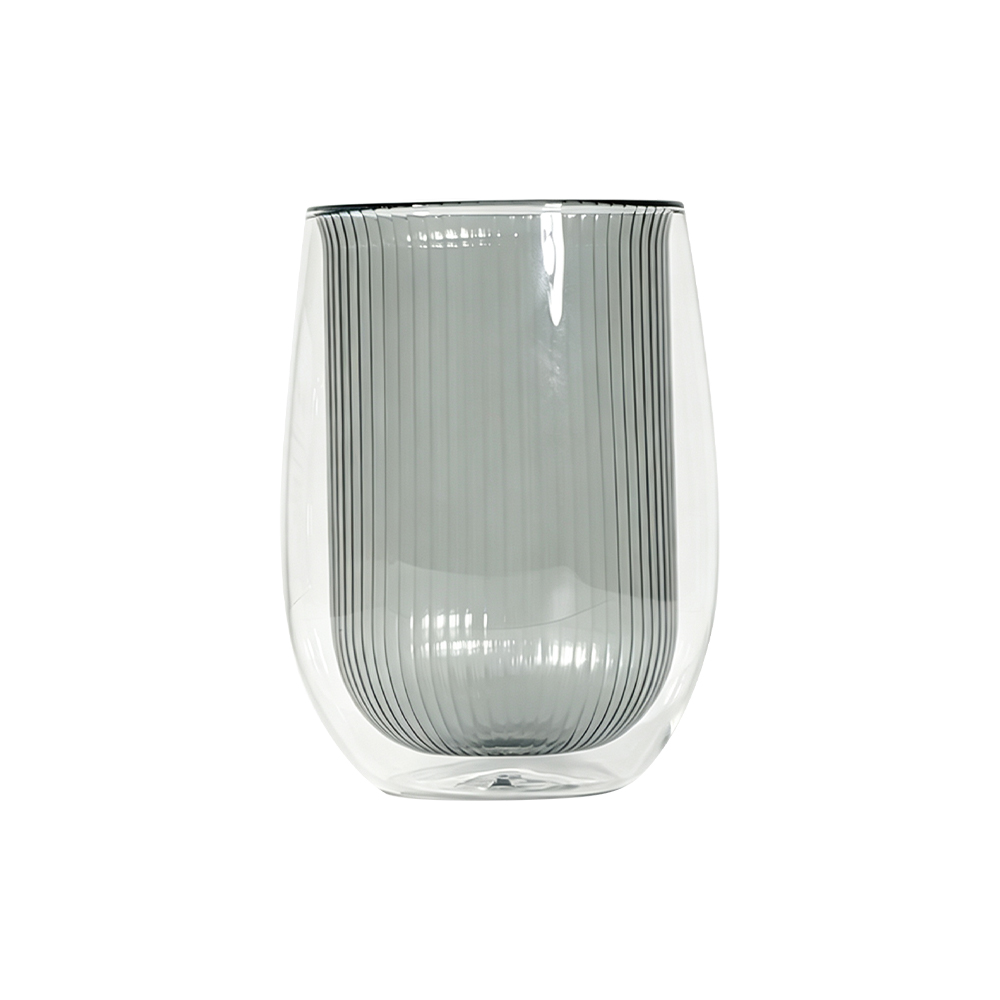
For a double-wall mug, the internal air layer plus the low expansion of the shell means you can pour boiling water into a chilled mug without the inner and outer layers exerting conflicting forces. We manufacture this exact style in our borosilicate double-wall mug, which is a popular item among coffee and tea brands.
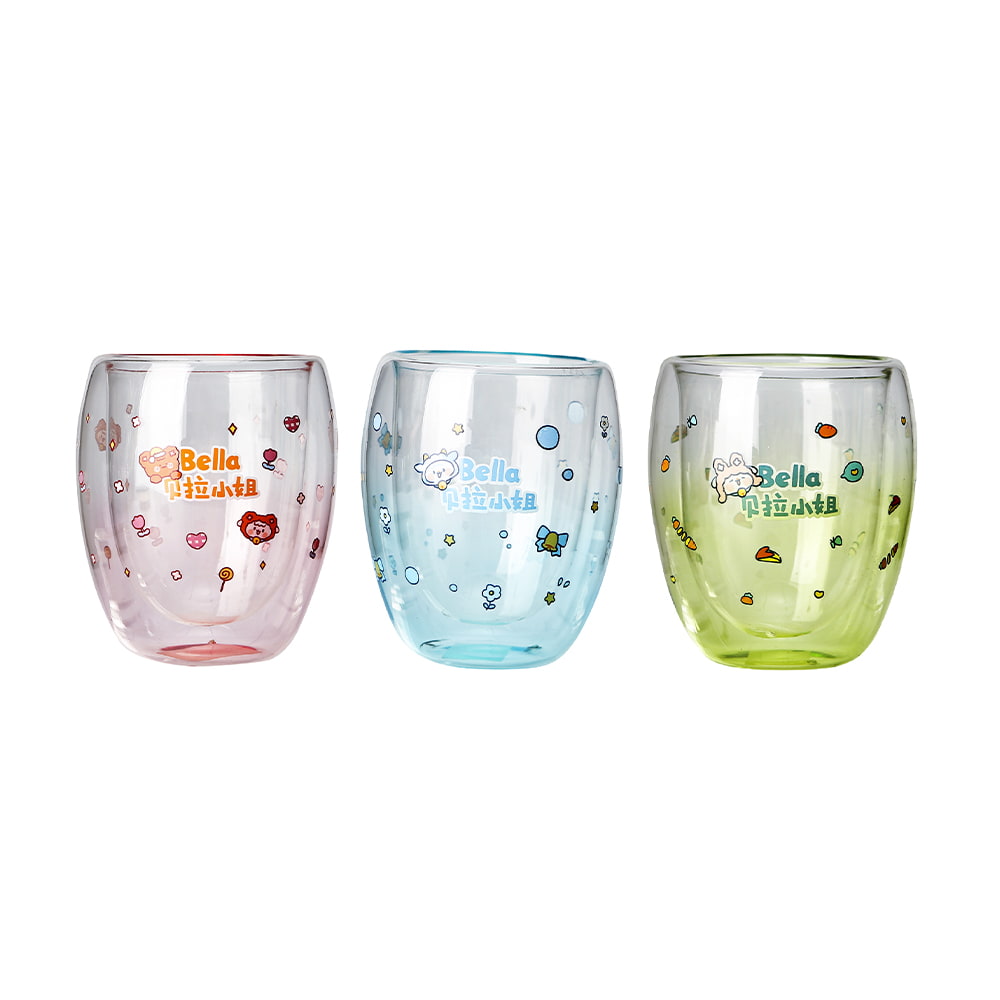 Borosilicate Double Wall Glass Mug for Hot and Cold BeveragesThis double-wall mug features a borosilicate glass body that resists thermal shock, making it safe for boiling water even when chilled. Its insulated design keeps drinks warm longer and is ideal for office or home use.View Product →
How Is High Borosilicate Glass Manufactured?
The production process is not fundamentally different from other glass, but the higher melting temperature and stricter annealing requirements set it apart. The essential steps are:
- Batch preparation: quartz sand, boric acid, soda ash, alumina, and reclaimed cullet are weighed with high precision. The boric acid content directly controls the final B₂O₃ level.
- Melting: the mixture is melted at 1550–1650°C, roughly 100–150°C higher than soda-lime glass, to ensure complete vitrification.
- Refining and homogenisation: molten glass is held at high temperature so that gas bubbles can escape, and glass is stirred to eliminate streaks.
- Forming: for household items, this usually happens by blowing into a mould or pressing with a plunger. A double-wall mug requires an additional inner-blowing step before the two walls are sealed.
- Annealing: pieces are cooled very slowly in a lehr from about 560°C down to room temperature over 30–60 minutes. This removes internal stresses that could cause delayed breakage.
- Inspection and quality control: every item is checked for wall thickness, seal integrity, and surface defects. For more on traditional glass making and the science behind it, you can read our industry article on how glass is made.
Consistent annealing is the single most important factor in producing borosilicate glass that survives hot-cold cycles. A facility with modern lehrs and experienced operators can reduce the failure rate in the field significantly compared with a workshop that skips controlled cooling.
Why Borosilicate Glass Is Preferred in Food Storage and Kitchenware
Kitchenware manufacturers look for a glass that can handle both direct flame and cold storage. High borosilicate glass delivers that flexibility. Consider a pickle jar: it must be sterilised with boiling water, refrigerated with brine, and then rinsed under hot water after use. With borosilicate, the jar can go through this cycle over and over without thermal stress fractures.
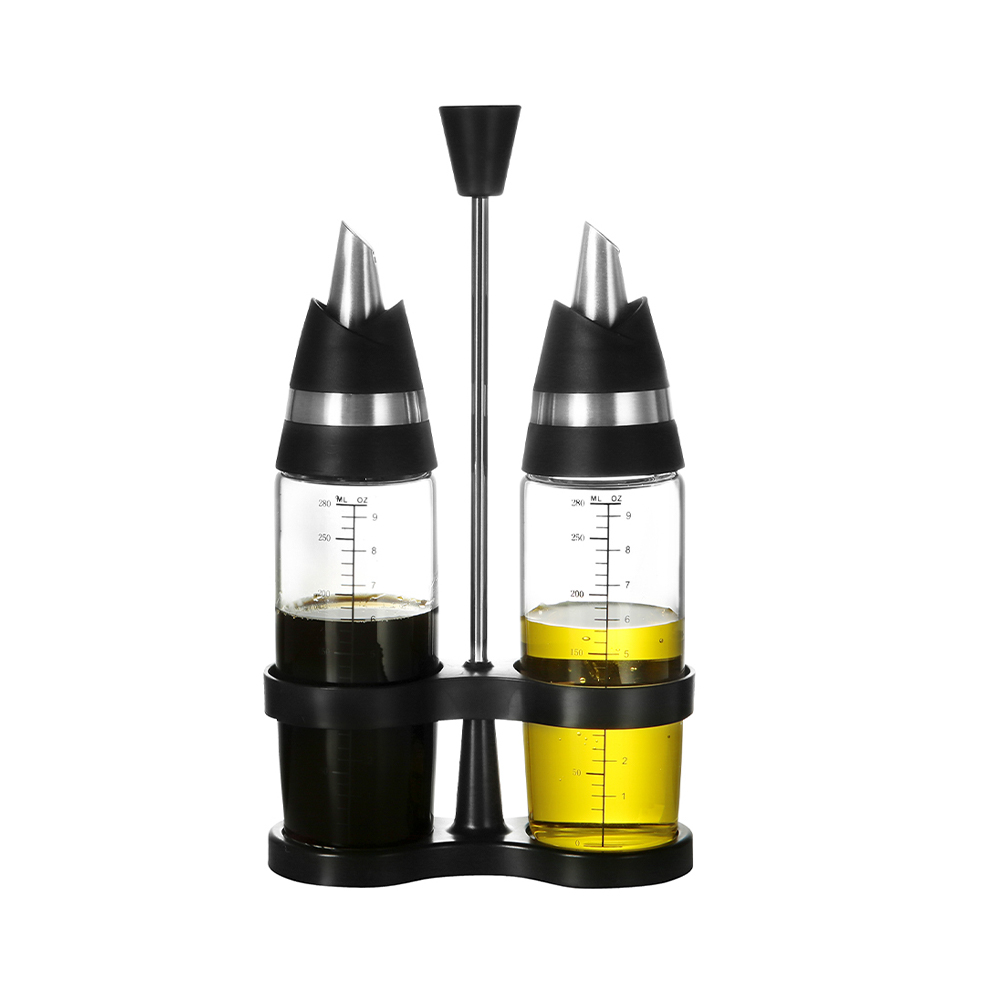
The same principle applies to oil and vinegar bottles. A borosilicate auto-open oil and vinegar bottle will not lose its seal in the dishwasher, nor will the neck crack when hot oil is poured in immediately after the glass has been sitting in a cool pantry. The 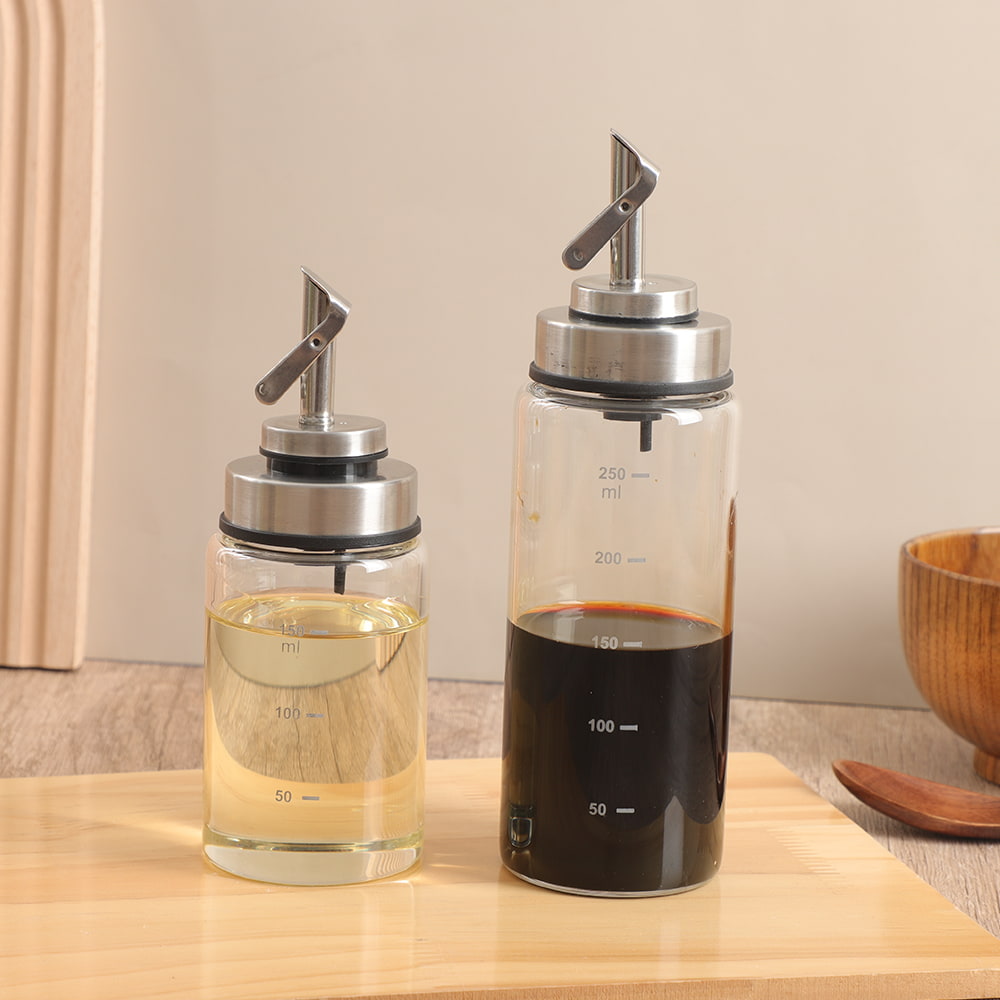 Borosilicate Glass Auto Open Oil and Vinegar Dispenser BottleThis oil and vinegar bottle has a gravity flip cap for one-handed pouring and a leak-proof silicone ring. Made of durable borosilicate glass, it withstands temperature changes and is easy to refill and clean.View Product → from our range is a good example of a product that combines day-to-day convenience with long-term durability.
Borosilicate Glass Auto Open Oil and Vinegar Dispenser BottleThis oil and vinegar bottle has a gravity flip cap for one-handed pouring and a leak-proof silicone ring. Made of durable borosilicate glass, it withstands temperature changes and is easy to refill and clean.View Product →
For airtight storage jars, borosilicate's non-porous surface prevents odour absorption. That matters when you store pickled vegetables, coffee beans, or dried herbs. It also means the glass will not discolour after years of repeated use, which is a common problem with cheaper glass that has residual metal oxides.
Key Differences Between Borosilicate and Soda-Lime Glass
If you are a buyer comparing two quotations for a glass storage jar, the difference in material matters more than the price difference. The table below highlights the most decisive factors.
| Property | Borosilicate | Soda-Lime |
|---|---|---|
| Thermal expansion | 3.3 × 10⁻⁶ /K | 9 × 10⁻⁶ /K |
| Safe temperature swing | 150–200°C | 40–70°C |
| Oven safe | Yes, up to ~280°C | No, risk of shattering |
| Chemical resistance | Excellent | Moderate |
| Weight per volume | ~2.23 g/cm³ | ~2.5 g/cm³ |
A simple test you can perform on a sample is to heat it in an oven to 200°C for twenty minutes, then plunge it into room-temperature water. A well-annealed borosilicate container will survive; a soda-lime container will almost certainly crack. That is the buying confidence you need when ordering thousands of units.
Advantages and Limitations of High Borosilicate Glass
No material is perfect. Understanding both the strengths and the trade-offs helps you position the product correctly in your market.
Advantages in Everyday Use
- Survives thermal shock: the main selling point for consumers.
- Does not retain stains or odours from strong spices.
- Microwave and dishwasher safe in most designs.
- High transparency showcases the product's contents, which helps in e-commerce photography.
- Lower density reduces freight cost per item when the product is packaged by volume.
Limitations to Communicate Honestly
- Higher manufacturing cost because of the higher melting temperature and careful annealing.
- Not as impact-resistant as chemically tempered glass. A heavy drop on a hard floor can still break it.
- For thin-walled items, extreme mechanical misuse may produce sharp shards, unlike tempered glass's small granules.
A practical takeaway for distributors: if the product will be used mainly with hot liquids, borosilicate is the correct material. If the product needs to withstand repeated physical blows, you should specify a thicker wall or combine borosilicate with a protective silicone sleeve.
How to Choose High Borosilicate Glass Products for Bulk Orders
When you are sourcing for a retail chain or an e-commerce brand, the cheapest quote is not always the best value. Use these practical parameters to compare suppliers.
- Check the B₂O₃ content. A certificate of composition or an independent lab test can confirm at least 5% boron oxide.
- Ask for the coefficient of thermal expansion. Values close to 3.3–4.0 × 10⁻⁶ /K are typical for household borosilicate.
- Request a sample that has passed a thermal shock test: heating to 180°C and dropping into 20°C water.
- Verify wall thickness uniformity. A variation of more than 0.3 mm between the base and side can create residual stress that no annealing can fully remove.
- Review the lid and seal components. Silicone gaskets should be food-grade and compatible with high temperatures; wooden or stainless lids add visual appeal but also affect price.
For long-term storage needs, a vacuum borosilicate jar with an air reducer is an excellent choice to extend the freshness of coffee beans, nuts, and pickled vegetables. Our glass vacuum storage jar is built with a borosilicate body and a silicone sealing ring that keeps food crisp for weeks. It is an ideal SKU for premium kitchenware lines.
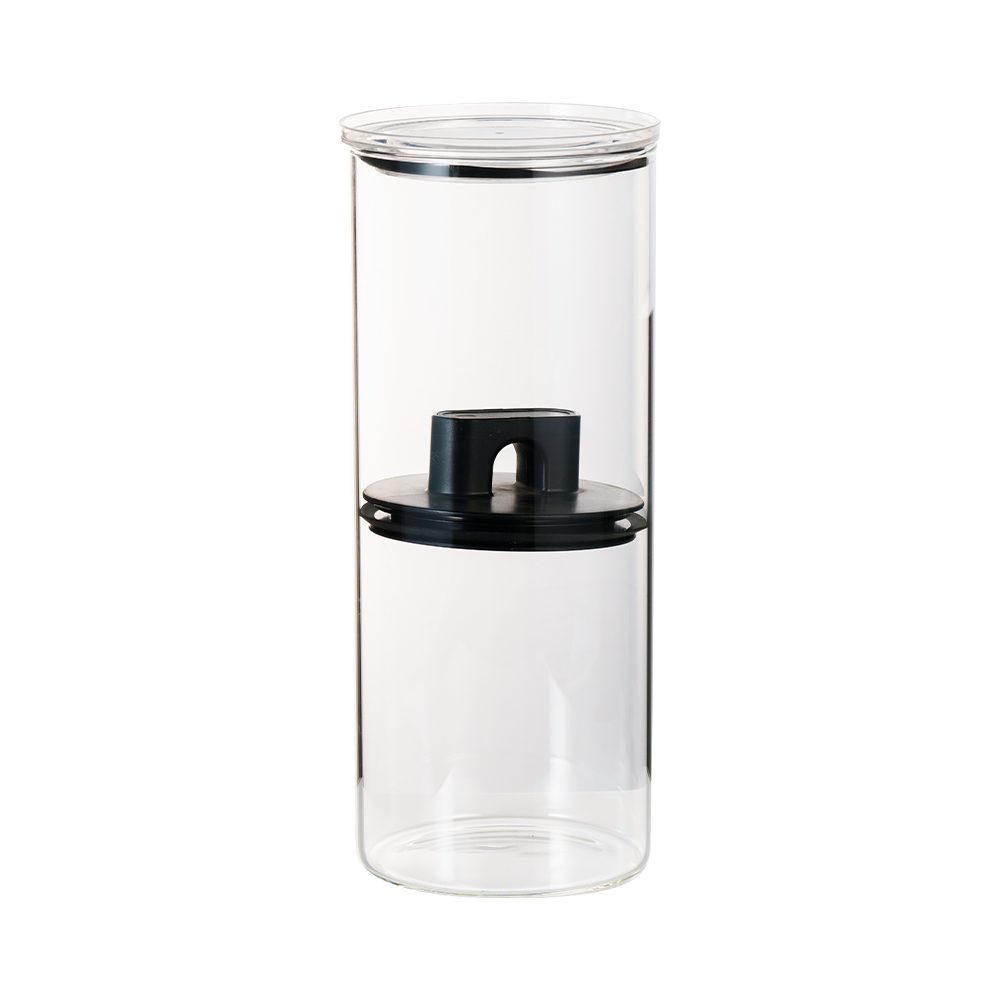 Borosilicate Glass Vacuum Storage Jar with Airtight SealThis vacuum storage jar uses a borosilicate body and silicone sealing ring to keep contents fresh for weeks. Its transparent design lets you check remaining items easily, ideal for storing coffee beans, nuts, and pickled vegetables.View Product →
If you are still evaluating potential suppliers, a direct conversation about your volume, target price, and packaging requirements is the fastest way to narrow the list. Our team welcomes such discussions; you can reach us via the contact page for a customised quotation.
Frequently Asked Questions
What is high borosilicate glass made of?
It is made mainly from silica sand and boric acid, with small amounts of sodium oxide and alumina. The boron oxide content is typically 12–13% in commercial borosilicate 3.3 glass, which gives the glass its low thermal expansion.
Is borosilicate glass the same as tempered glass?
No. Tempered glass is chemically or thermally strengthened by a different process, and it breaks into small granules. Borosilicate glass has a different composition and is prized for thermal shock resistance rather than mechanical impact resistance.
Can high borosilicate glass go in the oven?
Yes, most borosilicate vessels can be used in an oven at temperatures up to about 280°C. Always avoid sudden temperature changes; the glass is designed for thermal shocks but not for placing a hot dish directly on a cold countertop.
Is borosilicate glass microwave safe?
Yes, if the product has no metallic paint, trim, or metal lid. Borosilicate itself does not absorb microwaves, and its thermal stability prevents heat shock when the glass is heated unevenly.
What is the difference between borosilicate glass and normal glass?
Normal glass (soda-lime) expands more when heated and has a much lower tolerance for temperature swings. Borosilicate glass can survive a 150–200°C difference, while soda-lime glass will typically crack at a 50–70°C diff.
Is borosilicate glass toxic or leachable?
Borosilicate glass is chemically stable and inert. It does not leach heavy metals or flavours into acidic or oily contents. That is why it is widely used for laboratory beakers and food storage.
Why is borosilicate glass more expensive?
The raw material boric acid costs more than lime, and the melting and annealing processes consume more energy. These costs are passed through, but the product's longer service life and lower breakage rate often make it more economical in the long run.
High borosilicate glass is a specialised material that solves real heat, hygiene, and durability problems in kitchenware and food storage. Whether you are selling a pickle jar, a cold brew coffee maker, or a vacuum storage container, choosing a properly annealed borosilicate vessel protects your brand reputation and reduces end-user complaints. If you need help selecting the right borosilicate products for your programme, our team is available to discuss specs, customisation, and bulk pricing.
Recommended Products


- PRODUCT
- Glass Storage Jar
- Glass/Stainless Steel Drinking ware
- Kitchen Seasoning Containers
- Home Decoration
- QUICK LINKS
- Products
- About Us
- Manufacture
- ODM/OEM
- News
- Contact Us
- CONTACT US
-
-
 7 Crystal Boulevard xi’an Feng Town, Baoying County,Jiangsu, China.
 -
 WhatsApp:
+86-18083783456
+86-15005252638 -
 +86-18083766162
+86-18083783456
+86-15895746638
+86-0514-8866-8898
-
 julia@nchousewares.com
Jack@nchousewares.com
joy@nchousewares.com
-
- CONTACT

