
 English
  日本語
日本語  Deutsch
  Español




What Is Borosilicate Glass Made Of? Composition, Manufacturing, Complete Guide
Content
- 1 Borosilicate Glass: The Direct Answer
- 2 What Each Ingredient Does Inside the Glass Network
- 3 How Borosilicate Glass Is Manufactured in a Factory
- 4 Borosilicate Glass vs. Sodium-Lime Glass: The Numbers You Should Know
- 5 Where Borosilicate Glass Makes the Biggest Difference
- 6 Why Borosilicate Glass Costs More and When the Price Is Worth It
- 7 Frequently Asked Questions About Borosilicate Glass
- 7.1 Is borosilicate glass safe to use with boiling water?
- 7.2 Can borosilicate glass go in the microwave and dishwasher?
- 7.3 Does borosilicate glass contain lead or heavy metals?
- 7.4 How much more expensive is borosilicate glass than regular glass?
- 7.5 How can I tell if a glass product is truly borosilicate?
- 7.6 Does borosilicate glass break if dropped?
- 7.7 Where can I find a reliable borosilicate glass factory for OEM and ODM orders?
Borosilicate Glass: The Direct Answer
When a glass pitcher goes straight from a hot stove to a cold water bath, only borosilicate glass survives. The reason is not a coating or a tempering step, but the glass recipe itself. Borosilicate glass is made primarily from silica (SiO₂) and boron trioxide (B₂O₃), with small amounts of alumina and alkali oxides. The exact composition is standardized: about 80% silica, 13% boron trioxide, and around 5%–7% combined alumina, sodium oxide, and potassium oxide, according to ISO 3585 for glass class 3.3.
What separates this composition from ordinary glass is the boron content. When boric acid or borax is melted with silica and alumina at temperatures above 1,500°C, boron atoms replace part of the silica network. This substitution lowers the thermal expansion coefficient of the finished glass to roughly 3.3 × 10⁻⁶/K (20–300°C range). That low expansion means a borosilicate vessel can tolerate sudden changes of 160°C or more, while a sodium-lime glass item would shatter in the same situation.
Below is a detailed composition breakdown with values taken from ISO 3585 and public technical literature.
| Component | Mass Percentage | Primary Role in the Glass |
|---|---|---|
| Silica (SiO₂) | ≈80% | Network former; gives strength, hardness, and chemical resistance |
| Boron trioxide (B₂O₃) | ≈13% | Lowers thermal expansion; enhances thermal shock resistance |
| Alumina (Al₂O₃) | 2%–7% | Increases durability against water and acids |
| Sodium + potassium oxides | Under 8% | Fluxing agents; reduce melting point for easier forming |
What Each Ingredient Does Inside the Glass Network
Silica (SiO₂): The Structural Backbone
Silica from high-purity quartz sand forms the three-dimensional tetrahedral network of the glass. This is the skeleton that gives borosilicate glass its rigidity and resistance to deformation under mechanical load. In standard borosilicate formulations, silica is kept close to 80%. Below this level, the network begins to lose its integrity, and the glass becomes softer and more susceptible to scratching.
Boric Oxide (B₂O₃): The Thermal Shock Fighter
Boric oxide is the true differentiator. When boron is integrated into the silica network, it forms trigonal structures that interrupt the long, rigid chains. These bent bonds allow the glass structure to flex slightly when the temperature changes. As a result, the thermal expansion coefficient drops from the 8–9 × 10⁻⁶/K seen in soda-lime glass down to 3.3 × 10⁻⁶/K. This is a 2.5-fold improvement in dimensional stability under heat, and it is exactly why borosilicate glass does not crack when you pour boiling water into it.
Alumina (Al₂O₃): The Durability Enhancer
Alumina, usually added as feldspar or kaolin, stabilizes the glass against water and alkali attack. It also prevents the glass from devitrifying, which means it stops microscopic crystals from forming during the long cooling cycle. In a kitchen context, alumina makes the surface less likely to turn cloudy or develop micro-cracks after years of dishwasher cycles.
Sodium and Potassium Oxides: The Melting Assistants
Sodium oxide (from soda ash) and potassium oxide (from potassium carbonate) serve as fluxes. They break up the silica network enough to lower the melting point from over 1,700°C to about 1,600°C, which is still several hundred degrees hotter than soda-lime glass. The trick is keeping these fluxes under 8% in borosilicate glass. Too much sodium or potassium raises the thermal expansion back into the dangerous range and kills the thermal shock benefit entirely.
In addition to the four main ingredients, most industrial batches include 0.1%–0.3% cerium oxide as a clarifying agent. Modern hot-gas furnaces use cerium oxide to remove residual bubbles without relying on arsenic compounds. The result is a glass that appears water-clear, with no visible bubbles at the rim or wall.
How Borosilicate Glass Is Manufactured in a Factory
The production process is tighter and more energy-intensive than ordinary glass. Every step matters because a small change in composition or cooling speed can shift the thermal expansion coefficient by 0.2 × 10⁻⁶/K, which is enough to make the glass fail a standard hot-to-cold test.
- Batch mixing — Quartz sand, boric acid, alumina, sodium carbonate, and potassium carbonate are weighed to a tolerance of ±0.1%. The boric acid is the cost driver: it supplies the 13% B₂O₃ content, and its price is several times higher than washed silica sand.
- Melting — The batch is melted in a gas-fired or electric furnace at 1,600–1,650°C. This is about 200°C hotter than the soda-lime melting point. Long residence times give the boric acid time to react fully with the silica, which reduces the risk of a supersaturated boric layer that would cause surface scaling after the glass is formed.
- Forming — Molten borosilicate is viscous; it flows more slowly than soda-lime glass. The factory uses either a blow-and-blow machine for hollowware or a pressing process for thicker items. Because the melt is stringy, the forming speed is slower, and wall-thickness control becomes more demanding.
- Annealing — The formed item passes through an annealing lehr, where it is held at about 550°C and then cooled slowly to room temperature over 30–60 minutes. This step removes internal stresses. If annealing is shortened, the glass may develop an invisible strain that later turns into a crack when the product is exposed to hot water.
- Inspection — Each batch is checked for thermal shock tolerance. Samples are heated to 150–180°C and immediately plunged into water at 20°C. Only a zero-crack result passes. Any batch with a visible crack rate above 3% is rejected from the production line.
For a broader view of the fundamental ways raw silica is turned into usable glassware, our industry article on how glass is made explains the melting and forming sequence at a factory level.
Borosilicate Glass vs. Sodium-Lime Glass: The Numbers You Should Know
The clearest way to understand the material is to place it next to ordinary soda-lime glass. The comparison below is based on ISO 3585 for 3.3 borosilicate glass and common soda-lime reference data published by major glass technology institutions.
| Property | Borosilicate Glass 3.3 | Soda-Lime Glass |
|---|---|---|
| Thermal expansion (20–300°C) | 3.3 × 10⁻⁶/K | 8–9 × 10⁻⁶/K |
| Softening point | ≈820°C | ≈730°C |
| Max. safe thermal shock | 150–180°C | 40–60°C |
| Density | 2.23 g/cm³ | 2.50 g/cm³ |
| Resistance to acid attack | Very high | Moderate |
| Typical price increase | +30% to +80% | Baseline |
| Typical applications | Laboratoryware, teapots, coffee brewers, oven-safe food storage | Windows, bottles, everyday drinkware, simple jars |
Put simply, the thermal shock limit is the number that matters most for kitchen products. A borosilicate glass mug can go from a freezer at -18°C to boiling water at 100°C in a few seconds without forming a hairline crack. A soda-lime mug of comparable thickness would very likely split. The same holds for an empty borosilicate bowl being placed into a 200°C oven; the safe margin is far larger than for ordinary glass.
However, density is lower for borosilicate, which means 30% of the batch is consumed to produce the same volume per piece. This partly explains the higher material cost. Buyers who evaluate unit weight rather than unit volume often underestimate the real cost of a borosilicate product.
Where Borosilicate Glass Makes the Biggest Difference
The low expansion value becomes a practical benefit in four everyday scenarios
- Coffee and tea tools — Cold brew coffee makers, French press plungers, and glass pour-over drippers all go from refrigerator temperature to steaming hot water in a few seconds. Borosilicate is the standard material here because the alternative would fail within weeks.
- Food storage — Vacuum glass jars and airtight food containers are often moved from the fridge to a microwave. This direct temperature jump is a strong test. Borosilicate glass passes it reliably, while normal glass may develop micro-cracks that are invisible until the next reheat.
- Oil and vinegar bottles — Acetic acid in vinegar attacks the sodium content in soda-lime glass, creating a rough, white surface after six months of reuse. Borosilicate resists that attack, so the bottle stays clear for years.
- Double-wall drinking vessels — The two layers are made of the same borosilicate composition, so both expand and contract together even in hot steam. That avoids the stress point where a layered product would normally crack.
These product categories line up with items that most household buyers buy on repeat. That is why a factory that already produces borosilicate drinkware, oil dispensers, and vacuum jars can offer a consistent material story across an entire catalog.
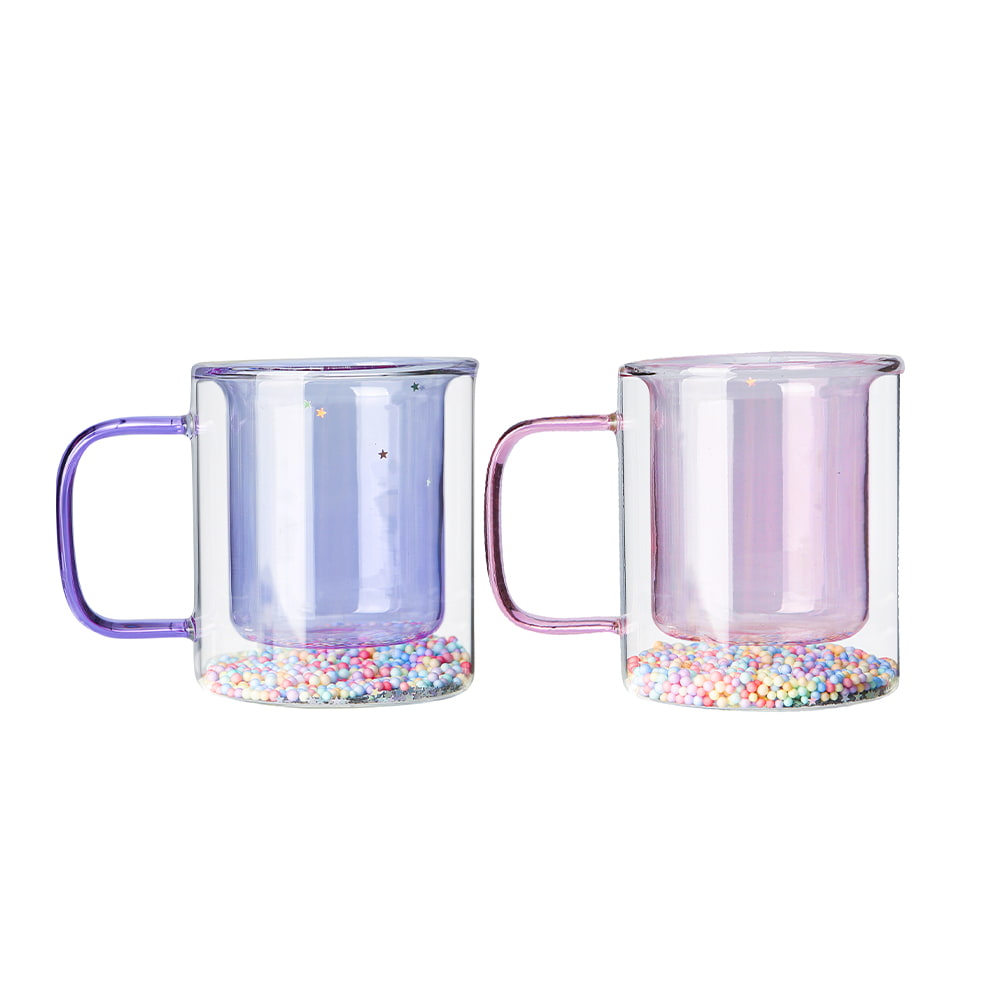
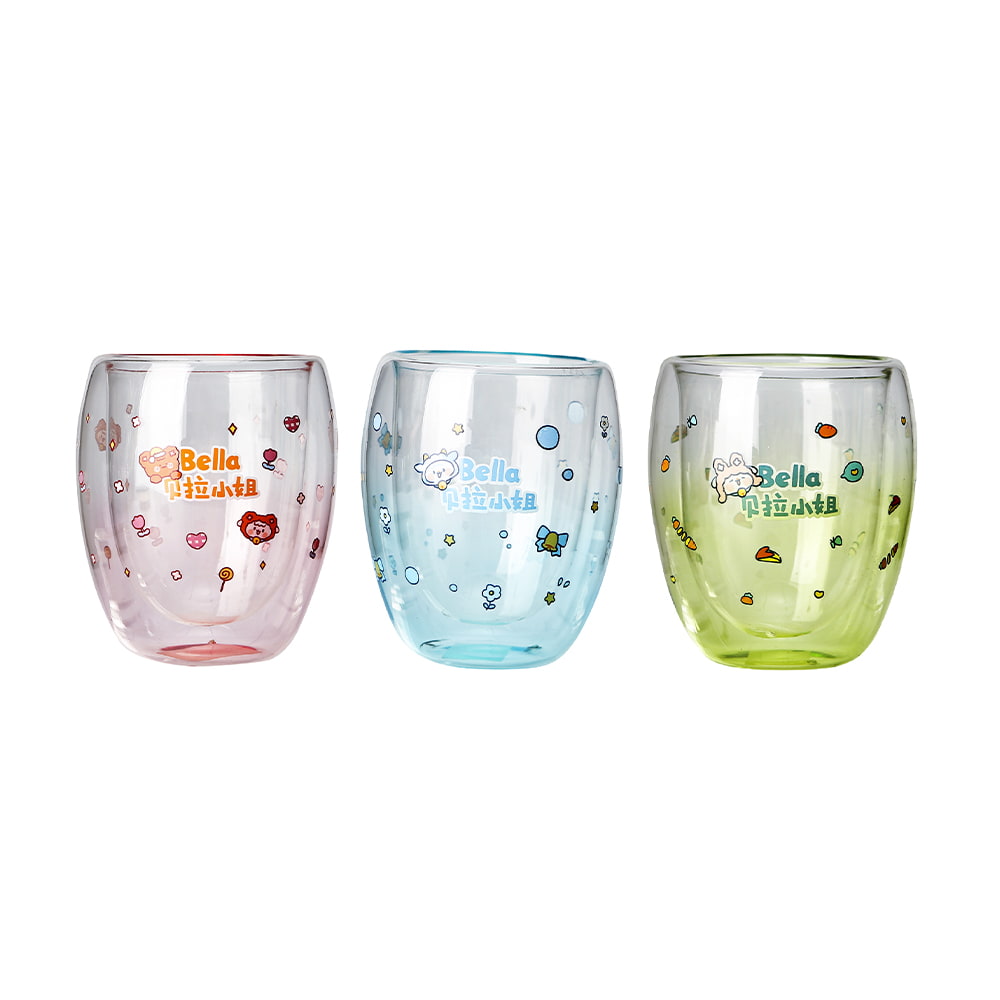 Borosilicate Double Wall Glass Mug with Heat InsulationThis double-wall mug is made of borosilicate glass, offering heat insulation and durability. It suits daily use for coffee or tea, aligning with the factory's consistent material story.View Product →
 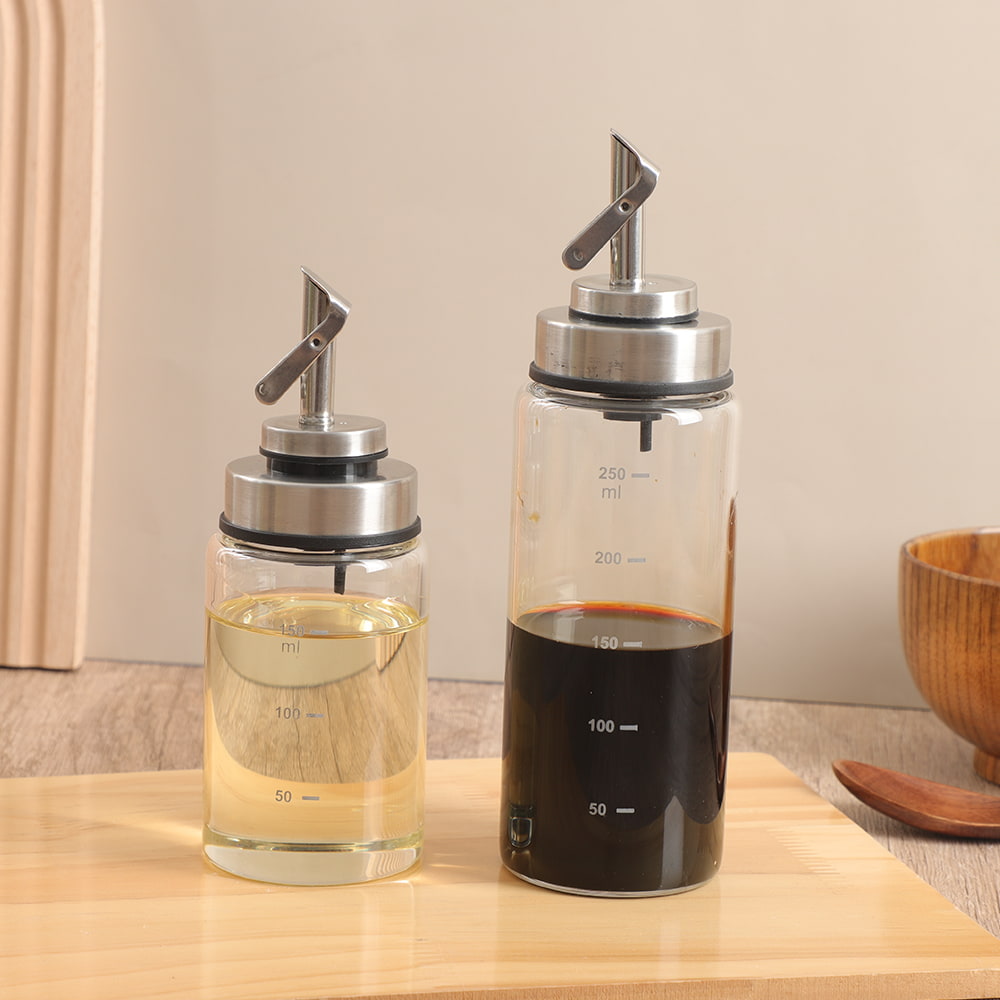 Borosilicate Glass Auto-Open Oil and Vinegar BottleThis oil dispenser features an auto-open lid and stainless steel nozzle for precise pouring. Made of borosilicate glass, it is leak-proof and easy to clean, fitting the household repeat-purchase category.View Product →
 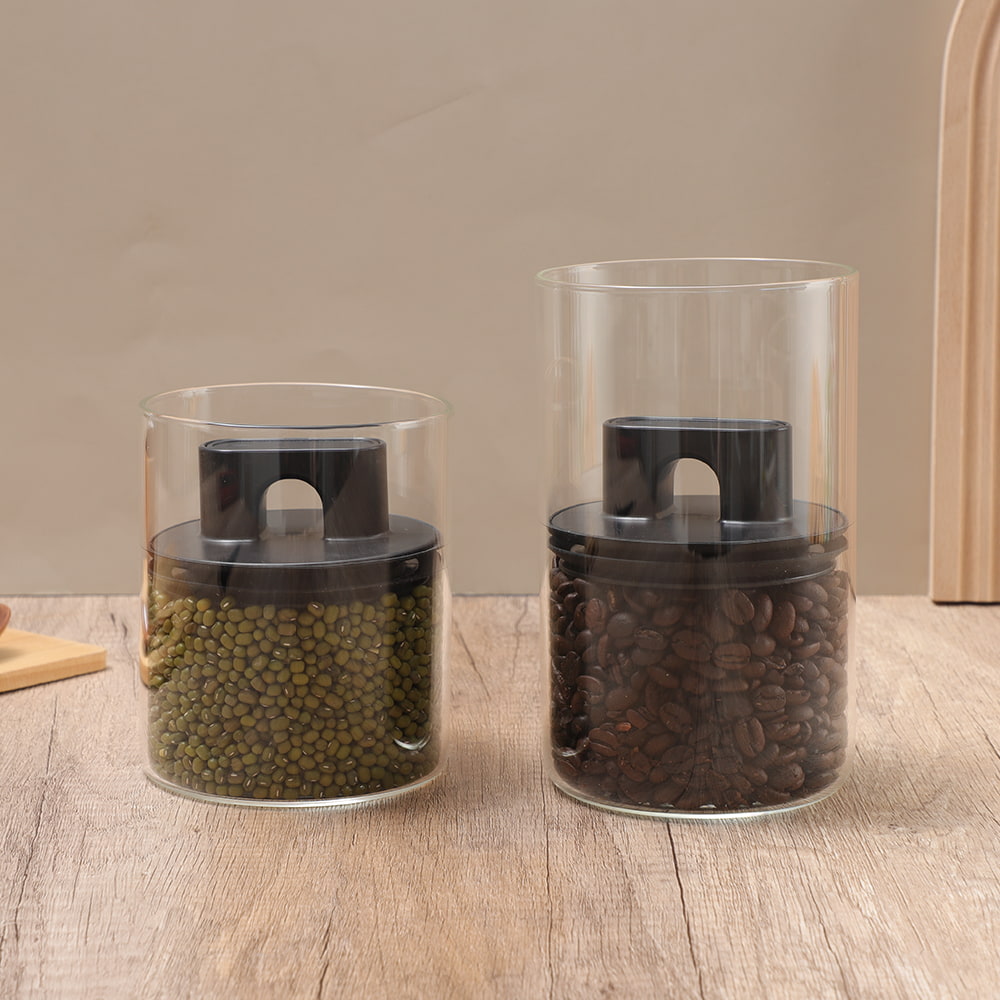 Vacuum Storage Jar with Airtight Borosilicate GlassThis storage jar uses borosilicate glass and a stainless steel lid with a vacuum seal to preserve freshness. Ideal for coffee or food, it matches the factory's focus on borosilicate products despite higher raw material costs.View Product →
Why Borosilicate Glass Costs More and When the Price Is Worth It
Raw material cost is the first factor. Boric acid, the source of B₂O₃, is a comparatively expensive industrial mineral compared to silica sand or limestone. A 13% content of boron trioxide multiplies the supply chain cost roughly 3–4 times at the raw batch level. That serious difference is passed down through the production line.
Energy use in the melting furnace also adds up. Because borosilicate melts at about 1,600°C and ordinary soda-lime at 1,400–1,450°C, each ton of borosilicate requires noticeably more fuel. In reality, the higher oxygen demand and longer refining time push energy consumption up by a noticeable margin over a full production shift.
Forming and yield are a third factor. The melt is more viscous, which means it takes longer to flow into a mold and requires careful control of the blow process to keep wall thickness even. A production manager at a glass factory will tell you that scrap rates in borosilicate forming are often 8–12%, while soda-lime forming typically runs at 4–6%. This scrap is not recyclable easily, so it is a direct loss.
For B2B buyers, the correct decision depends on product category. If the item is a cold brew coffee maker, a teapot, a vacuum storage jar, or an oil-and-vinegar bottle where acid and heat are always present, borosilicate is a non-negotiable material. In those cases the extra 30–80% cost is recovered through a lower customer return rate. If the product is a simple drinking water bottle or a decorative jar, soda-lime glass will deliver the same visual appearance with a lower unit price and better profit margin.
A good supplier will openly share expansion and thermal shock data for each product line, so you can make that decision before committing to a container volume.
Frequently Asked Questions About Borosilicate Glass
Is borosilicate glass safe to use with boiling water?
Yes. The low expansion coefficient of 3.3 × 10⁻⁶/K means the glass can handle a temperature jump from 20°C to 100°C without cracking in a standard wall thickness of 2 mm. This is the same material used to make laboratory beakers where boiling liquid is poured in directly.
Can borosilicate glass go in the microwave and dishwasher?
Yes for both. The glass will not absorb microwave energy, and it does not soften at normal domestic dishwasher temperatures. The main thing to avoid is a sudden thermal plunge right after the glass reaches a high surface temperature, for example placing a freshly microwaved container under cold water. A rapid 150°C drop can still be too much even for borosilicate.
Does borosilicate glass contain lead or heavy metals?
No in the standard ISO 3585 formulation. The ingredients are silica, boric oxide, alumina, sodium carbonate, and potassium carbonate. This glass is not crystal glass and does not add lead oxide. Cerium oxide is used as a refining agent, but it is a natural rare-earth oxide, not a heavy-metal additive.
How much more expensive is borosilicate glass than regular glass?
The price premium typically ranges from 30% to 80% depending on the product, wall thickness, and quantity. The boric acid raw material cost and the higher melting temperature account for most of that gap. For a storage jar or oil bottle, the increase is smaller; for a large vacuum container, it can be larger.
How can I tell if a glass product is truly borosilicate?
Look at the thermal shock labeling first. A genuine borosilicate product will mention a coefficient near 3.3 × 10⁻⁶/K or state that it is suitable for direct boiling-water filling. Refraction is not a reliable test, as soda-lime glass can be made fire-polished to look equally clear. The clearest confirmation is an electrical or thermal expansion measurement at the factory level.
Does borosilicate glass break if dropped?
It is still glass, so a hard drop onto concrete can make it shatter. The material excels at resisting heat stress rather than impact. Thicker walls provide more drop resistance, which is why vacuum jars normally have a 2–3 mm wall thickness and are tested to a shallow falls standard. For B2B buyers, the more relevant quantity is piece-to-piece thickness variation.
Where can I find a reliable borosilicate glass factory for OEM and ODM orders?
For a new product line, contact our team through the contact page with a target specification and annual volume. We can confirm wall thickness upper and lower limits, thermal shock acceptance criteria, and packaging methods before we send a sample set.
Recommended Products


- PRODUCT
- Glass Storage Jar
- Glass/Stainless Steel Drinking ware
- Kitchen Seasoning Containers
- Home Decoration
- QUICK LINKS
- Products
- About Us
- Manufacture
- ODM/OEM
- News
- Contact Us
- CONTACT US
-
-
 7 Crystal Boulevard xi’an Feng Town, Baoying County,Jiangsu, China.
 -
 WhatsApp: +86-18083783456
 -
 +86-18083766162
+86-18083783456
+86-15895746638
+86-0514-8866-8898
-
 julia@nchousewares.com
Jack@nchousewares.com
-
- CONTACT

