
 English
  日本語
日本語  Deutsch
  Español




How Many Holes Do Salt and Pepper Shakers Have?
Content
- 1 The Direct Answer: How Many Holes Do Salt and Pepper Shakers Have?
- 2 Why Salt Shakers Have More Holes Than Pepper Shakers
- 3 Standard Hole Counts by Shaker Type: A Reference Table
- 4 Regional Differences: The UK Convention Is the Opposite
- 5 How to Tell Salt and Pepper Shakers Apart Without Tasting Them
- 6 Choosing the Right Glass Kitchen Seasoning Containers
- 7 Glass vs. Other Materials for Kitchen Seasoning Containers
- 8 Common Problems With Salt and Pepper Shakers and How to Fix Them
- 9 How to Fill Glass Kitchen Seasoning Containers Without Making a Mess
- 10 Expanding Beyond Salt and Pepper: Using Glass Seasoning Containers for Other Spices
- 11 Cleaning and Maintaining Glass Kitchen Seasoning Containers
The Direct Answer: How Many Holes Do Salt and Pepper Shakers Have?
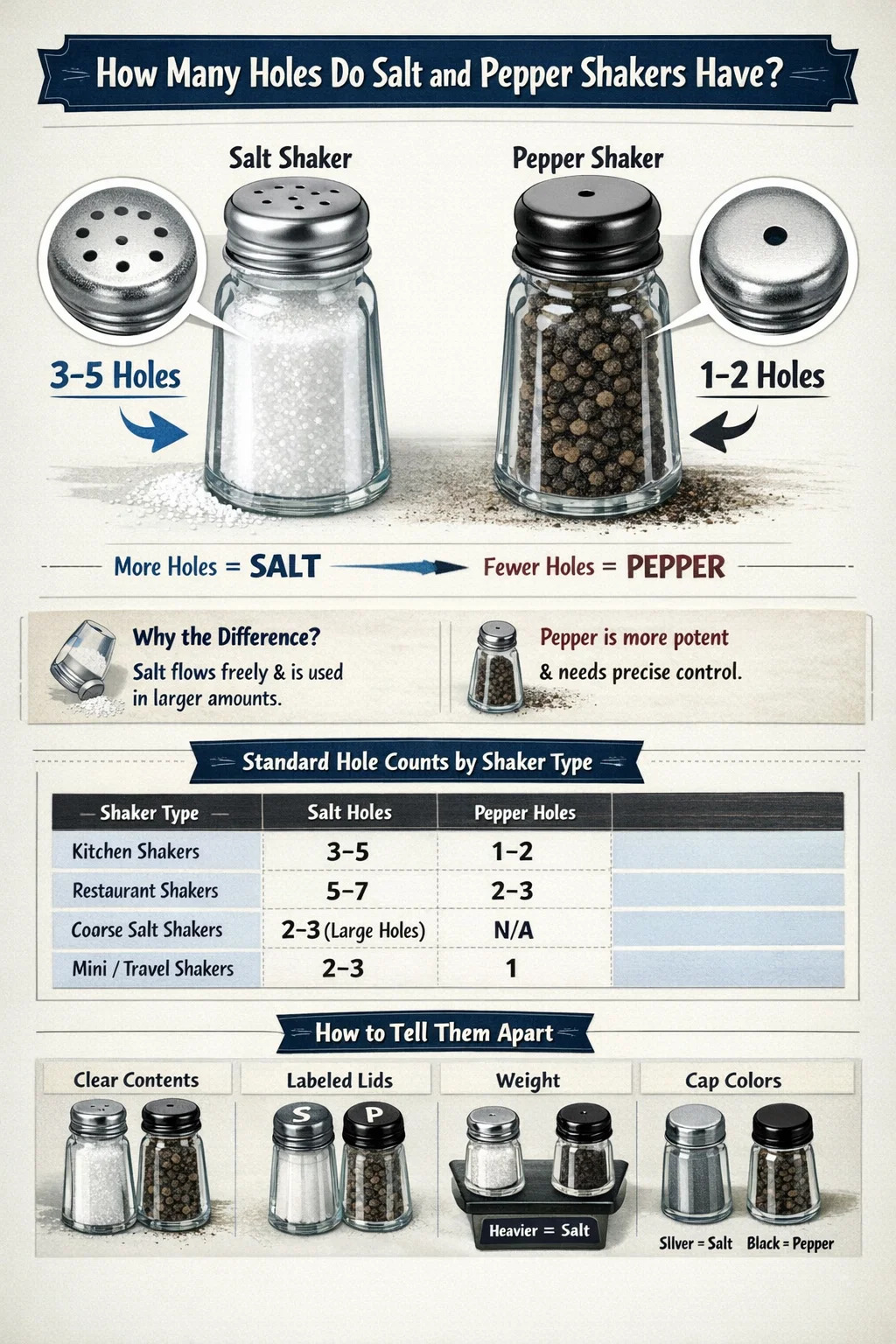
Salt shakers typically have 3 to 5 holes, while pepper shakers usually have just 1 to 2 holes. This difference is intentional — salt flows freely because it dissolves quickly and is used in larger quantities, whereas pepper is a more potent spice that requires controlled dispensing. The hole-count convention varies by country and brand, but this is the most widely accepted standard in the United States and across most of Europe.
If you have ever picked up a glass kitchen seasoning container and wondered which one holds salt and which holds pepper, the number of holes is your fastest visual guide. More holes = salt. Fewer holes = pepper. That said, there are real exceptions depending on the design, region, and manufacturer — so understanding the full picture helps you use your shakers correctly and choose the right set for your kitchen.
Why Salt Shakers Have More Holes Than Pepper Shakers
The logic behind hole count comes down to the physical and culinary properties of each spice. Salt is a mineral with fine, uniform granules that clump easily in humidity. To compensate for slower flow and to deliver an adequate amount with each shake, manufacturers design salt shakers with more holes — typically 3, 4, or 5 openings — so that enough salt exits in one motion.
Pepper, on the other hand, is ground from dried berries and has a sharper, more volatile flavor. A small amount goes a long way. Too many holes would send an overwhelming cloud of pepper onto your food with a single shake. That is why pepper shakers are designed with 1 or 2 holes — to slow the flow and give you precise, restrained seasoning control.
There is also a moisture factor. Salt is hygroscopic, meaning it absorbs water from the air. Even with extra holes, salt can still get sticky and clog. That is why many glass kitchen seasoning containers include a few grains of dry rice inside the salt shaker — the rice absorbs ambient moisture and keeps the salt flowing freely through all its holes.
The Role of Granule Size in Hole Design
Coarse salt and coarse-ground pepper both require larger holes. If you use kosher salt or sea salt flakes in a standard fine-salt shaker, you will find the granules simply do not pass through the small openings. The same applies to coarsely cracked black pepper. Hole diameter typically ranges from 2mm to 5mm depending on the intended salt or pepper type. When shopping for glass kitchen seasoning containers, always check whether the holes are sized for the type of seasoning you use most.
Standard Hole Counts by Shaker Type: A Reference Table
Different shaker styles, materials, and intended uses come with different hole configurations. Here is a breakdown of the most common types found in households and restaurants:
| Shaker Type | Salt Holes | Pepper Holes | Typical Use |
|---|---|---|---|
| Standard Glass Kitchen Seasoning Containers | 3–5 | 1–2 | Home dining table |
| Restaurant / Commercial Shakers | 5–7 | 2–3 | High-volume table service |
| Coarse Salt Shakers | 2–3 (larger holes) | N/A | Sea salt, kosher salt |
| Mini Travel / Picnic Shakers | 2–3 | 1 | Outdoor dining, travel |
| Dual-Chamber Seasoning Containers | 3 (one side) | 1 (other side) | Space-saving kitchen storage |
Regional Differences: The UK Convention Is the Opposite
Here is something that catches many people off guard: in the United Kingdom, the hole-count convention is reversed. British salt shakers traditionally have fewer holes, and pepper shakers have more. The reasoning traces back to historical British culinary habits where pepper was used more generously than salt at the table.
So if you have ever grabbed what you thought was the salt at a restaurant in London and dumped a full coating of black pepper on your chips, now you know why. The visual rule — more holes equals salt — applies firmly in North America and most of continental Europe, but not necessarily in the UK.
When buying imported glass kitchen seasoning containers or antique shaker sets, it is worth checking the label or testing each shaker before placing them on the table. Some vintage British sets in particular follow the reversed convention without any visual indication other than hole count.
How to Tell Salt and Pepper Shakers Apart Without Tasting Them
Beyond hole count, there are several reliable methods to identify which glass kitchen seasoning container holds what:
- Color of the contents: Salt is white and bright. Pepper is dark gray or black. When the glass is clear, you can see directly which is which.
- Labels on the lid or body: Many glass kitchen seasoning containers feature an "S" for salt and "P" for pepper etched or printed on the cap or glass surface.
- Hole count (in US/EU): More holes = salt. This is the quickest identification method when the shakers are identical in appearance.
- Weight: Salt is denser than ground pepper. A heavier shaker of the same size is more likely to be salt.
- Cap color coding: Many modern seasoning container sets use different cap colors — silver for salt, black for pepper is a common pairing.
Clear glass kitchen seasoning containers remove all ambiguity. You can see the content at a glance without relying on hole count or labels. This is one reason why glass designs remain so popular for home and restaurant use despite the availability of ceramic, plastic, and stainless steel alternatives.
Choosing the Right Glass Kitchen Seasoning Containers
Not all glass kitchen seasoning containers are built the same. Hole count is just one factor in selecting the right set. Here is what to evaluate before making a purchase:
Glass Quality and Thickness
Borosilicate glass is more heat-resistant and durable than standard soda-lime glass. For a kitchen environment where containers may be placed near a stove or hot surfaces, borosilicate is worth the price difference. Standard glass is fine for table use. Look for containers with at least 3mm wall thickness to resist chipping when handled frequently.
Cap and Lid Material
The lid determines how well the holes stay consistent and how airtight the seal is when not in use. Common options include:
- Stainless steel lids: Rust-resistant, easy to clean, long-lasting. The most popular choice for glass seasoning containers used daily.
- Plastic lids: Lightweight and inexpensive, but prone to cracking over time and may absorb odors from strong spices.
- Ceramic lids: Aesthetically appealing and dense enough to keep moisture out, but heavier and more fragile.
- Bamboo lids: A popular modern choice for eco-conscious kitchens. Naturally moisture-resistant but may warp over time in very humid environments.
Capacity and Form Factor
Standard glass kitchen seasoning containers hold between 3 oz (90ml) and 6 oz (180ml). For a family of four using salt and pepper daily, a 4 oz container typically lasts two to three weeks before needing a refill. Larger restaurant-style shakers hold up to 12 oz and are available from commercial kitchen suppliers.
Tall, cylindrical designs are the most common and easiest to grip. Shorter, wider designs offer more stability on the table but can be harder to fill cleanly. Square and hexagonal glass containers have gained popularity in recent years for their ability to sit snugly in spice racks without rolling.
Glass vs. Other Materials for Kitchen Seasoning Containers
Glass is widely considered the gold standard for seasoning containers, but it helps to understand exactly why — and when another material might be a better fit.
| Material | Durability | Visibility | Hygiene | Best For |
|---|---|---|---|---|
| Glass | High (if thick) | Excellent | Excellent — non-porous | Daily home and restaurant use |
| Ceramic | Medium | None (opaque) | Good | Decorative kitchen display |
| Stainless Steel | Very High | None | Excellent | Commercial kitchens, outdoor use |
| Plastic | Low–Medium | Some (semi-clear) | Fair — can stain or absorb odors | Travel, kids' use, budget kitchens |
Glass wins on hygiene because it is non-porous and does not absorb flavors or odors. After washing, a glass container returns to a completely neutral state — something plastic simply cannot match. Glass also does not leach chemicals into food, which is an important consideration when the container sits filled with salt (a corrosive substance) for extended periods.
Common Problems With Salt and Pepper Shakers and How to Fix Them
Even the best glass kitchen seasoning containers run into issues. Here are the most frequent problems and practical solutions:
Salt Clumping and Clogging the Holes
This is by far the most common complaint. Salt absorbs moisture from cooking steam and ambient air, forming hard clumps that block the holes entirely. Solutions include:
- Add 3 to 5 dry grains of uncooked rice to the shaker. The rice acts as a desiccant and keeps the salt dry.
- Store the shaker in a cool, dry location away from the stove and dishwasher steam.
- Use an anti-caking salt blend, which includes additives like calcium silicate to prevent clumping.
- If holes are already blocked, use a toothpick or a thin needle to clear them individually without enlarging the opening.
Pepper Dispensing Too Slowly
Coarsely ground pepper often fails to pass through standard pepper shaker holes. If you prefer a coarser grind, choose a glass kitchen seasoning container specifically designed for coarse pepper — these have holes with a diameter of 3mm or larger. Alternatively, switch to a pepper mill or grinder for full control over grind size.
Moisture Getting Inside the Container
If condensation appears inside the glass body, the seal between the glass and the lid is not tight enough. Check that the rubber or silicone gasket (if present) is intact. For metal-capped shakers without a gasket, a small strip of food-safe silicone tape around the thread can improve the seal significantly.
Confusion Over Which Shaker Is Which
For matching shaker sets where both containers look identical, confusion is a regular annoyance. The simplest permanent fix is to use a paint pen or adhesive label to mark "S" and "P" on the bottom of each container. Clear glass shakers eliminate this problem entirely — the visible contents tell you everything you need to know at a glance.
How to Fill Glass Kitchen Seasoning Containers Without Making a Mess
Refilling shakers sounds simple but is a surprisingly messy process without the right technique. Follow these steps for a clean refill every time:
- Place the shaker on a sheet of white paper or a small plate before opening to catch any spills.
- Unscrew the lid fully and set it aside on a clean surface to avoid contaminating the threads with spilled seasoning.
- Use a small funnel — a standard spice funnel with a narrow tip works perfectly for standard glass kitchen seasoning containers.
- Fill the container to no more than 80% capacity. Overfilling causes seasoning to pack against the holes and reduces flow.
- Before replacing the lid, wipe the rim of the glass with a dry cloth to prevent salt or pepper from grinding into the threads and making the cap difficult to open next time.
- Screw the lid on firmly but without over-tightening, which can crack the glass neck on thinner containers.
For households that use specialty salts — like pink Himalayan, smoked sea salt, or fleur de sel — it is worth keeping a dedicated glass container for each type. Cross-contamination between different salt varieties can affect flavor, and it is far easier to maintain separate labeled glass containers than to clean them between each refill.
Expanding Beyond Salt and Pepper: Using Glass Seasoning Containers for Other Spices
Glass kitchen seasoning containers are not limited to salt and pepper. Their non-reactive, non-porous nature makes them ideal for storing a wide range of dry spices and blends. Many home cooks keep a set of matching glass containers on the counter for frequently used seasonings, filled with items like:
- Garlic powder — used heavily in everyday cooking and benefits from a 3–4 hole container for moderate flow
- Red chili flakes — best in a 1–2 hole shaker given the intensity of the spice
- Dried oregano or thyme — works well in a wider-hole shaker since the flakes are larger than fine powder
- Onion powder — fine granule, flows similarly to salt, pairs well with a 3-hole glass container
- Seasoned salt blends (like Lawry's or Tony Chachere's) — popular tabletop seasonings that work well in standard glass shakers
When using glass containers for spices other than salt and pepper, label them clearly and consider using a cap color system to distinguish them from your main salt and pepper set. This prevents the all-too-common mistake of reaching for what looks like pepper and getting a heavy dose of cayenne on your scrambled eggs.
Sets of 6, 8, or 12 matching glass kitchen seasoning containers are widely available online and in kitchen stores. These sets allow you to create a uniform, organized spice station that stores neatly in a rack or on a rotating lazy Susan, keeping all your most-used seasonings within reach and visually appealing on the counter.
Cleaning and Maintaining Glass Kitchen Seasoning Containers
Regular cleaning prevents buildup around the holes, keeps lids turning smoothly, and ensures your seasonings stay fresh. Here is a practical cleaning routine:
Weekly Quick Clean
Wipe the exterior of the glass container and the lid with a slightly damp cloth. Pay attention to the rim area and the surface around the holes, where salt in particular can crystallize into a crust over time. Do not submerge the filled shaker — moisture through the holes will ruin the contents.
Monthly Deep Clean
Empty the shaker completely. Wash the glass body and lid separately in warm soapy water. Use a small bottle brush to clean the inside of the glass thoroughly. For the lid, use a toothbrush to scrub inside and around each hole to remove compacted seasoning. Rinse both pieces thoroughly and allow them to air dry completely — at least 24 hours — before refilling. Even a small amount of residual moisture will cause the salt to clump immediately upon contact.
Dishwasher Safety
Most glass kitchen seasoning containers are technically dishwasher safe, but repeated dishwasher cycles can corrode metal lids, cloud glass surfaces, and degrade rubber gaskets over time. Hand washing extends the life of the containers considerably, especially for stainless steel-capped sets. If you do use the dishwasher, place the containers on the top rack only, and remove the lids to wash them separately by hand.
Recommended Products


- PRODUCT
- Glass Storage Jar
- Glass/Stainless Steel Drinking ware
- Kitchen Seasoning Containers
- Home Decoration
- QUICK LINKS
- Products
- About Us
- Manufacture
- ODM/OEM
- News
- Contact Us
- CONTACT US
-
-
 7 Crystal Boulevard xi’an Feng Town, Baoying County,Jiangsu, China.
 -
 WhatsApp:
+86-15005252638 -
 +86-15005252638
+86-18083766162
+86-15895746638
+86-0514-8866-8898
-
 joy@nchousewares.com
Jack@nchousewares.com
julia@nchousewares.com
-
- CONTACT

