
 English
  日本語
日本語  Deutsch
  Español




How Hard Is Glass? Mohs Scale Guide for Glass Containers Products
Content
- 1 How Hard Is Glass? The Direct Answer
- 2 Understanding the Mohs Hardness Scale for Glass
- 3 What Determines How Hard a Piece of Glass Is
- 4 Comparing Common Glass Types by Hardness
- 5 Why Hardness Matters for Glass Containers Products
- 6 Hardness vs. Strength vs. Toughness: Three Different Properties
- 7 Glass Hardness Compared to Alternative Packaging Materials
- 8 How Different Industries Use Glass Hardness Data
- 9 Environmental and Handling Factors That Affect Real-World Performance
- 10 Care and Handling Tips to Preserve Glass Container Surfaces
- 11 How Manufacturers Test Glass Hardness
- 12 Common Misconceptions About Glass Hardness
- 13 Choosing Glass Containers Products for Your Application
- 14 Frequently Asked Questions
- 14.1 Is glass harder than steel?
- 14.2 Why can sand scratch glass if glass is fairly hard?
- 14.3 Does tempered glass have higher hardness than regular glass?
- 14.4 Which is harder, soda-lime glass or borosilicate glass?
- 14.5 How is glass hardness measured most precisely?
- 14.6 Do all glass containers products have the same hardness?
- 14.7 Can glass hardness change over time?
- 14.8 Does a higher hardness rating mean a container is less likely to break?
- 14.9 What glass type is best for reusable containers that go through frequent washing?
- 14.10 How can I verify a supplier's claimed glass hardness before placing a bulk order?
How Hard Is Glass? The Direct Answer
Standard soda-lime glass, the type used in most bottles, jars, and windows, measures between 5.5 and 7 on the Mohs hardness scale. That places it above a steel knife blade and a copper coin, but below quartz, topaz, and sapphire. In practical terms, everyday glass resists scratching from fingernails, fabric, and most plastics, yet it can still be marked by sand, grit, ceramic, and hardened steel tools.
Hardness is only one property among several that determine how well a piece of glass performs. For anyone sourcing glass containers products for food, beverage, cosmetic, or pharmaceutical packaging, understanding the difference between hardness, strength, and toughness is what actually prevents breakage, scuffing, and returns.
This guide walks through where glass sits on the hardness scale, why the number varies by glass type, how manufacturers measure and control it, and how the answer translates into real purchasing decisions for anyone specifying containers, jars, bottles, or vials at commercial volume.
Quick reference: Soda-lime glass ≈ 5.5–6 Mohs · Borosilicate glass ≈ 6–7 Mohs · Fused quartz ≈ 7 Mohs · Sapphire glass ≈ 9 Mohs · Diamond (top of scale) = 10 Mohs.
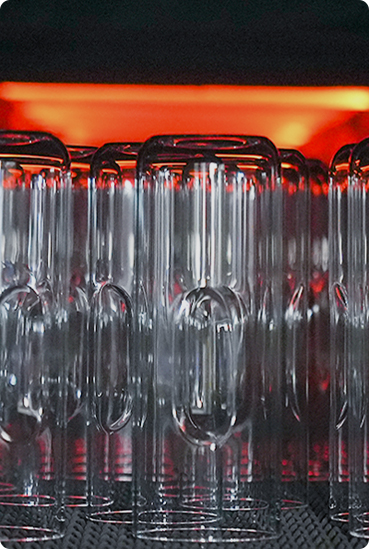
Understanding the Mohs Hardness Scale for Glass
The Mohs scale ranks materials from 1 (talc, the softest) to 10 (diamond, the hardest) based on a simple test: a material can only scratch another material that sits at or below it on the scale. The scale is ordinal rather than linear, which means the jump in actual physical hardness between step 9 and step 10 is far larger than the jump between step 1 and step 2. Corundum, at 9, is measurably closer in absolute hardness to talc than it is to diamond at 10.
The scale was developed in 1812 by mineralogist Friedrich Mohs as a field-friendly way to identify minerals without laboratory equipment, and it remains the fastest way to get an approximate hardness reading on a glass sample using nothing more than a set of reference picks.
Applied to glass, this scale explains everyday scratch behavior. A fingernail (roughly 2 to 2.5 Mohs) and a copper penny (roughly 3 to 3.5 Mohs) cannot scratch glass. A steel knife blade sits close to glass itself, around 5.5 Mohs, which is why light contact rarely leaves a mark but repeated abrasion sometimes does. Quartz dust, common in household grit and outdoor sand, rates at 7 Mohs and is one of the most frequent causes of fine scratches on glass surfaces, shelving, and containers.
1
2.5
3.5
5.5–7
7
9
Because the Mohs scale only measures relative scratch resistance, it says nothing about how a material behaves under bending, dropping, or sudden temperature change. A separate section below explains why that distinction matters for anyone buying glass containers products in volume.
What Determines How Hard a Piece of Glass Is
Glass hardness is not fixed; it shifts with chemistry and processing. Five factors have the largest effect on the final scratch resistance of a container or panel.
1. Base chemical composition
Silica (SiO2) is the primary hardening agent in almost every glass formula. Soda-lime glass, which makes up close to 90 percent of commercial glass production, blends silica with soda ash and lime to lower the melting point for mass manufacturing, which slightly reduces hardness compared to purer formulas. Borosilicate glass adds boron trioxide, raising both thermal shock resistance and surface hardness to roughly 6 to 7 Mohs. Fused quartz, composed almost entirely of silica, reaches around 7 Mohs but is costly to produce at scale. Aluminosilicate glass, which incorporates alumina alongside silica, can push hardness toward 7 to 7.5 Mohs and is often selected for display cases, cookware, and specialty containers that need both heat and scratch resistance.
2. Thermal and chemical tempering
Tempering, whether by rapid heat treatment or chemical ion exchange, compresses the outer surface of the glass and can raise mechanical strength by two to four times compared to untreated glass. This dramatically improves resistance to impact and thermal shock. Surface hardness, however, changes very little through tempering; a tempered jar breaks less easily but is not meaningfully more scratch-resistant than the same jar before treatment. Chemical strengthening through ion exchange, where smaller sodium ions in the glass surface are swapped for larger potassium ions in a molten salt bath, is the method behind many high-durability consumer glass products, and it works on the same principle used for reinforced smartphone cover glass.
3. Surface coatings and finishing
Thin protective coatings, silicone sprays, and polished rims can reduce micro-scratching during handling and transit without changing the bulk material's Mohs rating. Hot-end and cold-end coatings applied immediately after forming are standard practice in bottle manufacturing: a hot-end tin oxide layer improves the base surface, while a cold-end polyethylene wax layer reduces bottle-to-bottle contact scuffing on the filling line. This is a common finishing step for premium glass containers products destined for retail shelves, where cosmetic scuffing during shipping directly affects perceived quality.
4. Manufacturing consistency
Seasonal and batch-to-batch variation in raw materials can shift hardness within a narrow band, which is why reputable manufacturers test incoming and outgoing batches rather than relying on a single published spec sheet. Furnace temperature control, cooling rate during annealing, and raw material purity all contribute to small variations between production runs, even when the nominal glass formula stays the same.
5. Surface age and micro-damage accumulation
A brand-new glass surface tests closer to its theoretical maximum hardness. Over months or years of handling, invisible micro-scratches accumulate, and these existing flaws make the surface more susceptible to further damage and, eventually, to fracture initiation under stress. This is one reason reused glass containers products in industrial or laboratory settings are periodically inspected and retired rather than used indefinitely.
Comparing Common Glass Types by Hardness
The table below lines up the glass types most relevant to packaging and container manufacturing against familiar reference materials.
| Material | Mohs Hardness | Typical Use |
|---|---|---|
| Soda-lime glass | 5.5 – 6 | Bottles, jars, windows, tableware |
| Borosilicate glass | 6 – 7 | Lab glassware, bakeware, essential oil bottles |
| Aluminosilicate glass | 7 – 7.5 | Cookware, display cases, specialty containers |
| Fused quartz glass | ~7 | Optical components, cuvettes |
| Steel knife blade | ~5.5 | Reference material |
| Quartz sand / dust | 7 | Common cause of surface scratching |
| Sapphire glass | 9 | Watch crystals, premium optics |
Beyond Mohs, industrial specification sheets often report Knoop or Vickers hardness for finer resolution. Soda-lime glass typically registers around 480 to 580 on the Knoop scale, while borosilicate glass measures somewhat higher, generally in the 480 to 620 range depending on formulation. These numeric scales are useful when comparing suppliers whose products fall within the same Mohs band but differ in finer surface performance.
Why Hardness Matters for Glass Containers Products
Buyers evaluating glass containers products for food, beverage, cosmetic, or pharmaceutical use often assume hardness and breakage resistance are the same thing. They are not. Hardness governs scratch and abrasion resistance at the surface. Impact resistance and burst strength depend far more on wall thickness, annealing quality, tempering, and container geometry.
- Retail shelf appearance: higher surface hardness and a clean finish reduce visible scuffing from repeated stacking, unpacking, and handling during distribution.
- Label and print adhesion: screen printing, frosting, and coating processes interact differently with harder versus softer glass surfaces, affecting long-term durability of branding.
- Cleaning and reuse cycles: containers designed for repeated washing, such as reusable jars or lab bottles, benefit from higher hardness to resist the cumulative abrasion of industrial cleaning brushes and automated washing lines.
- Chemical and thermal exposure: borosilicate containers combine higher hardness with better thermal shock resistance, which is why they dominate laboratory and high-heat packaging applications.
- Automated filling line compatibility: high-speed filling and capping equipment relies on consistent friction and surface behavior; containers with unpredictable hardness or coating quality can jam feed rails or chip at contact points.
- Long-term storage clarity: a harder, less scratch-prone surface stays visually clear over longer storage periods, which matters for products where visual inspection of contents is part of quality control.
In sourcing conversations, it is more useful to ask a supplier for the intended wall thickness, tempering process, and annealing standard than to ask only for a Mohs number, since the Mohs rating alone will not predict how a container performs on a filling line or during transit.
Hardness vs. Strength vs. Toughness: Three Different Properties
These three terms are frequently used interchangeably in casual conversation but describe distinct physical behaviors, and confusing them is one of the most common sourcing mistakes in glass packaging.
Hardness
Resistance to surface scratching and abrasion, measured on scales like Mohs, Knoop, or Vickers.
Strength
Resistance to breaking under bending, pressure, or impact load, heavily influenced by tempering and wall design.
Toughness
Ability to absorb energy and resist fracture propagation once a crack or flaw exists, which is why laminated and layered glass designs exist.
A glass container can be hard on the surface yet fail under an impact if the wall is thin or the annealing process left internal stress. Conversely, a tempered container can be highly impact-resistant while its surface hardness, and therefore its scratch resistance, remains close to that of untreated glass.
A practical example makes the distinction clear. Two jars made from the same soda-lime formula, one annealed and one heat-tempered, will scratch under roughly the same load, since their surface hardness is nearly identical. Drop both jars from the same height onto a hard floor, however, and the tempered jar will typically survive an impact that fractures the annealed one, because tempering changed internal stress distribution and impact strength without changing surface hardness at all.
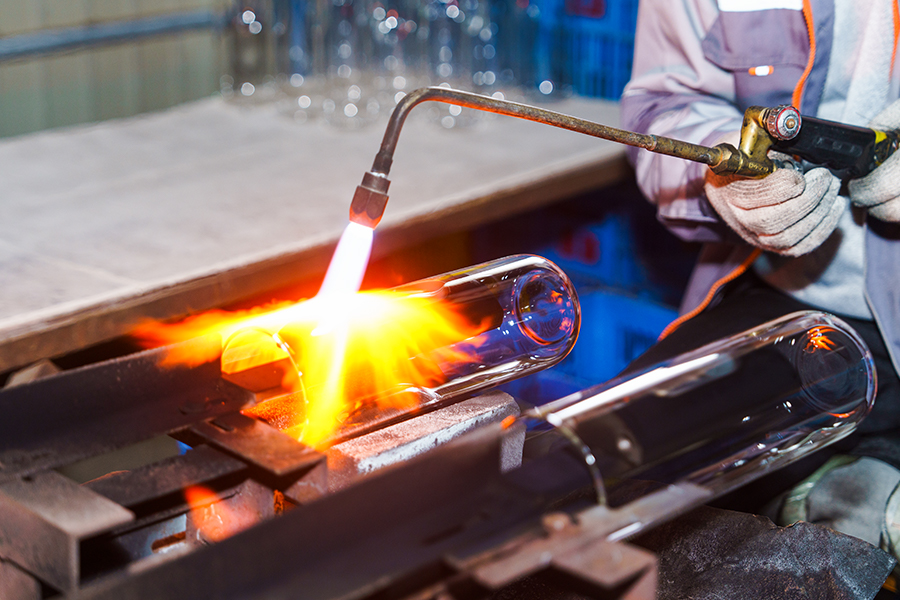
Glass Hardness Compared to Alternative Packaging Materials
Buyers weighing glass containers products against plastic, aluminum, or ceramic packaging often ask how the materials stack up on durability. Hardness is one piece of that comparison, but each material trades off differently.
Glass vs. plastic (PET, HDPE)
Common plastics used in bottles, such as PET and HDPE, rate far below glass on any hardness scale, typically comparable to a fingernail or lower, which means they scratch and dent easily but rarely shatter. Glass wins decisively on scratch resistance, optical clarity retention, and chemical inertness, while plastic wins on weight and impact tolerance during shipping.
Glass vs. aluminum
Aluminum containers resist shattering entirely but dent and scuff under far lighter contact than glass requires to scratch, since aluminum's surface hardness is well below that of soda-lime glass. Aluminum is frequently chosen for shipping-heavy applications where glass's rigidity becomes a liability, while glass remains preferred where product visibility and a premium tactile feel matter.
Glass vs. ceramic
Fired ceramic bodies can approach or exceed glass hardness, generally in the 6 to 7 Mohs range depending on glaze composition, but ceramic containers add opacity and weight, which limits their use to specialty packaging rather than general-purpose glass containers products.
How Different Industries Use Glass Hardness Data
The practical relevance of a hardness spec shifts depending on the end application. The following breakdown covers the sectors most commonly sourcing glass containers products.
Food and beverage packaging
Standard soda-lime glass is the default choice, since typical hardness levels comfortably resist scratching from label application, capping equipment, and shelf handling. Buyers in this sector generally prioritize wall thickness and annealing quality over pushing for a higher hardness formula, since cost efficiency at high volume matters more than marginal scratch improvements.
Cosmetics and personal care
Premium cosmetic packaging often specifies additional cold-end coatings and polished finishes on top of standard soda-lime or borosilicate glass, since visible scuffing directly undermines the perceived quality of the product on a retail shelf or in unboxing photography.
Pharmaceutical and laboratory use
Borosilicate glass is the industry standard here, chosen primarily for chemical resistance and thermal shock tolerance, with the higher hardness serving as a secondary benefit that extends the usable life of containers put through repeated autoclave sterilization and washing cycles.
Industrial and chemical storage
Hardness becomes relevant alongside chemical inertness when containers hold abrasive slurries or particulates internally, since internal surface wear can occur even without external handling damage, gradually reducing wall thickness in high-throughput industrial settings.
Environmental and Handling Factors That Affect Real-World Performance
A published Mohs number describes the material under controlled test conditions. Several real-world variables shift how that hardness translates into actual container performance.
- Temperature extremes: hardness measurements typically hold near room temperature; at elevated temperatures approaching the glass softening point, surface hardness drops measurably, which matters for containers exposed to hot-fill processes.
- Humidity and moisture exposure: prolonged moisture contact can cause minor surface leaching in some glass formulas, subtly altering the outermost layer's resistance to abrasion over years of storage.
- Cleaning chemical exposure: strong alkaline or acidic cleaning agents can etch glass surfaces over repeated cycles, which is a separate mechanism from mechanical scratching but produces a similar loss of surface clarity.
- Transit vibration and stacking pressure: repeated micro-contact between stacked containers during transport accumulates scratches even when no single event exceeds the glass's hardness threshold, since sustained low-force abrasion behaves differently than a single scratch test.
Care and Handling Tips to Preserve Glass Container Surfaces
Because glass hardness is fixed once manufactured, protecting a container's appearance and structural integrity over its service life comes down to handling practices rather than the material itself.
- Use soft interleaving material, such as tissue or foam dividers, between glass containers during shipping and storage to prevent glass-on-glass contact.
- Avoid abrasive cleaning pads and powders; opt for soft cloths and non-abrasive detergents to prevent gradual clouding from micro-scratching.
- Keep glass containers away from sand, grit, and dust during storage, since quartz-based particulates are harder than common glass and are the leading cause of fine surface scratches.
- Inspect reusable containers periodically for surface flaws, since accumulated micro-damage reduces both scratch resistance and impact tolerance over time.
- Avoid sudden temperature swings, particularly with soda-lime containers, since thermal shock resistance is lower than borosilicate glass and can cause fracture independent of surface hardness.
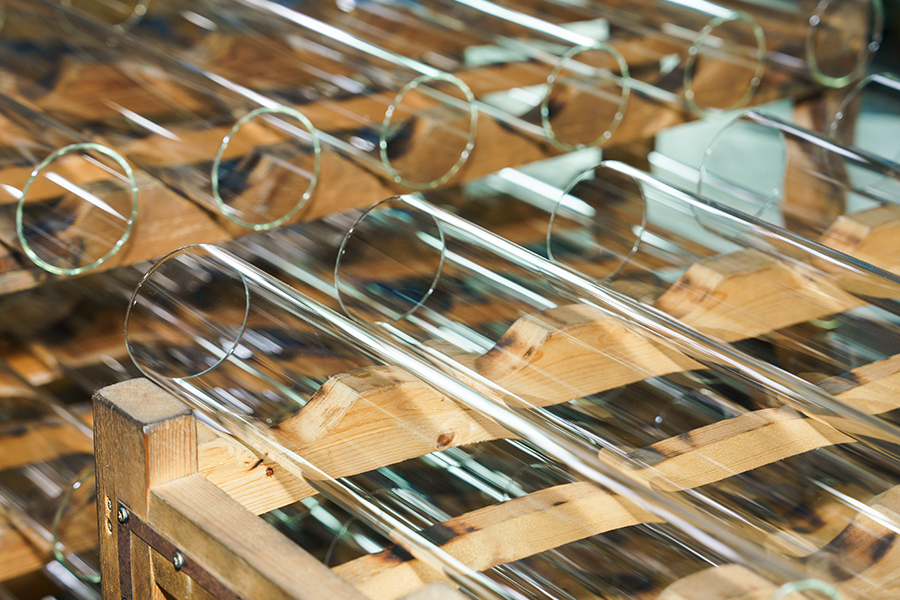
How Manufacturers Test Glass Hardness
Quality control for glass containers products typically relies on more precise methods than a simple Mohs pick, especially for buyers verifying incoming shipments.
Mohs scratch test
A set of reference picks with known hardness values, ranging roughly from 2 to 9, is drawn across the surface at a shallow angle. A visible scratch means the pick is harder than the sample; a clean slide with no mark means the sample is harder. This test is fast and low-cost but only gives an approximate, qualitative result.
Knoop and Vickers indentation testing
Both methods press a small diamond indenter into the glass surface under a controlled load and measure the resulting indentation. These tests produce a precise numeric hardness value and are commonly used in industrial specification sheets, often referenced against standards such as ASTM C1327 for Knoop hardness of glass. The Knoop indenter is elongated, at roughly seven times longer than it is wide, which makes it well suited to thin or brittle samples such as container walls, while the Vickers indenter produces a symmetric, easier-to-read diamond-shaped impression.
Practical incoming-QC checks
For procurement teams, a quick Mohs pick check on a sample batch can flag mismatched glass types, for example confirming that containers ordered as borosilicate were not substituted with cheaper soda-lime glass, which is a documented issue in budget glassware supply chains. Combining a scratch check with a visual inspection under raking light, where a light source is angled across the surface to reveal existing micro-scratches, gives a fast and low-cost secondary confirmation before a shipment is accepted.
Common Misconceptions About Glass Hardness
Myth: Harder glass is always stronger glass
Fact: Hardness and impact strength are governed by different mechanisms. A container can rate high on the Mohs scale and still break easily if the wall is thin or improperly annealed, while a lower-hardness formula that has been well tempered can outperform it under impact.
Myth: Tempered glass is scratch-proof
Fact: Tempering changes internal stress distribution to improve impact resistance, but it does not meaningfully raise surface hardness, so tempered containers remain just as susceptible to scratching from harder materials like quartz-based grit.
Myth: All glass containers products have identical hardness
Fact: Hardness varies by base formula, batch consistency, and finishing process. Two containers that look identical can differ in surface hardness if one uses soda-lime glass and the other borosilicate.
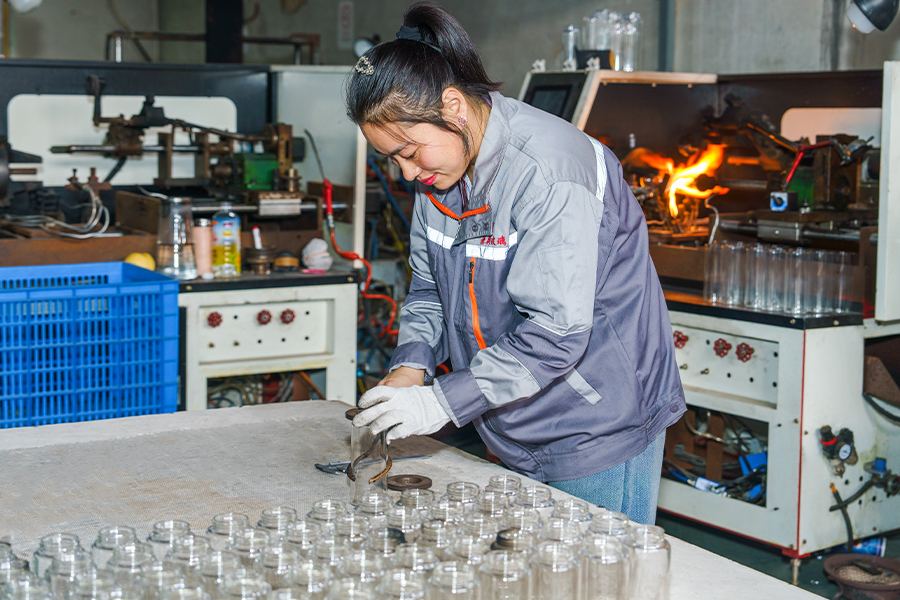
Choosing Glass Containers Products for Your Application
Matching the right glass type to an application saves money and reduces returns. The following guidance reflects common industry practice.
- For everyday food and beverage packaging with standard shelf handling, soda-lime glass offers the best balance of cost and adequate hardness.
- For products exposed to heat, rapid temperature changes, or aggressive chemicals, borosilicate glass provides both higher hardness and superior thermal shock resistance.
- For containers that will be reused, refilled, or run through automated washing lines, prioritize both hardness and a tempering process rated for repeated mechanical stress.
- For premium retail packaging where surface finish is part of the brand experience, request sample batches and inspect scuff resistance after simulated transit handling before committing to a full production run.
- For high-volume industrial orders, ask suppliers for batch-level Knoop or Vickers hardness data rather than relying solely on a general Mohs range, since this gives a more reliable basis for comparing multiple vendors.
| Application | Recommended Glass Type | Priority Property |
|---|---|---|
| Beverage bottles | Soda-lime glass | Cost efficiency at volume |
| Essential oil / dropper bottles | Borosilicate glass | Chemical resistance |
| Laboratory storage vials | Borosilicate glass | Thermal shock resistance |
| Premium cosmetic jars | Soda-lime with coating | Surface finish and clarity |
| Reusable industrial containers | Tempered borosilicate glass | Repeated-use durability |
Frequently Asked Questions
Is glass harder than steel?
Common glass, at roughly 5.5 to 6.5 Mohs, is close in hardness to standard steel tools, which sit around 5.5 Mohs. Hardened steel files can reach 6.5 Mohs, occasionally exceeding common glass, which is why steel tools can sometimes scratch glass surfaces under pressure.
Why can sand scratch glass if glass is fairly hard?
Sand and dust are largely composed of quartz, which rates at 7 Mohs, above the 5.5 to 6.5 range of typical soda-lime glass. This is the single most common cause of fine surface scratches on glass containers, shelving, and windows during cleaning or transit.
Does tempered glass have higher hardness than regular glass?
Not significantly. Tempering raises mechanical strength and impact resistance by two to four times but leaves surface hardness largely unchanged, since the tempering process alters internal stress distribution rather than the material's chemical composition.
Which is harder, soda-lime glass or borosilicate glass?
Borosilicate glass typically rates slightly higher, around 6 to 7 Mohs, compared to 5.5 to 6.5 Mohs for soda-lime glass. Borosilicate also offers better thermal shock resistance, which is why it is favored for laboratory glassware and heat-exposed containers.
How is glass hardness measured most precisely?
Knoop and Vickers indentation tests provide precise numeric hardness values by pressing a diamond indenter into the surface under a controlled load, and are the standard methods referenced in industrial glass specifications, as opposed to the Mohs scratch test, which is qualitative.
Do all glass containers products have the same hardness?
No. Hardness varies by glass formula, batch composition, and finishing process. Buyers sourcing containers at scale should request material specification sheets and, where possible, test incoming samples rather than assuming uniform hardness across suppliers.
Can glass hardness change over time?
The bulk hardness of the material itself stays stable, but the practical scratch resistance of a surface can decline as micro-scratches accumulate from repeated handling, cleaning, or contact with abrasive particulates over months or years of use.
Does a higher hardness rating mean a container is less likely to break?
Not directly. Breakage resistance depends primarily on wall thickness, annealing quality, and tempering, while hardness only describes resistance to surface scratching. A container can have excellent hardness and still crack under impact if these other factors are not addressed.
What glass type is best for reusable containers that go through frequent washing?
Borosilicate glass with a proper tempering process is generally preferred, since its higher baseline hardness combined with improved impact resistance handles repeated mechanical stress from automated washing lines better than standard soda-lime glass.
How can I verify a supplier's claimed glass hardness before placing a bulk order?
Request a material specification sheet with Knoop or Vickers hardness values, ask for a small sample batch, and run a basic Mohs pick test alongside a visual inspection under raking light to check for consistency before committing to full production volume.
Recommended Products


- PRODUCT
- Glass Storage Jar
- Glass/Stainless Steel Drinking ware
- Kitchen Seasoning Containers
- Home Decoration
- QUICK LINKS
- Products
- About Us
- Manufacture
- ODM/OEM
- News
- Contact Us
- CONTACT US
-
-
 7 Crystal Boulevard xi’an Feng Town, Baoying County,Jiangsu, China.
 -
 WhatsApp:
+86-15005252638 -
 +86-15005252638
+86-18083766162
+86-15895746638
+86-0514-8866-8898
-
 joy@nchousewares.com
Jack@nchousewares.com
julia@nchousewares.com
-
- CONTACT

