
 English
  日本語
日本語  Deutsch
  Español




What Is Borosilicate Glass? The Complete Guide to Its Safety, Properties, and Uses
Content
- 1 Borosilicate Glass: A Direct Answer
- 2 What Is Borosilicate Glass Made Of?
- 3 Borosilicate Glass vs. Soda-Lime Glass
- 4 Is Borosilicate Glass Safe?
- 5 Thermal Shock Resistance and Real Limits
- 6 Everyday Uses of Borosilicate Glass
- 7 How to Identify Good Borosilicate Glassware
- 8 Care and Cleaning Guidelines
- 9 Frequently Asked Questions
- 10 Bottom Line
- 11 Sources
Borosilicate Glass: A Direct Answer
Borosilicate glass is a low-expansion glass made primarily of silica and boron trioxide. It offers much higher resistance to thermal shock than ordinary soda-lime glass, which is why it is used in laboratory flasks, coffee makers, and glass storage containers that encounter rapid temperature changes.
If you are here because you want to know whether borosilicate glass is safe, the short answer is yes. It is inert, food-safe, and free of the plastic additives found in resin-coated containers. The longer answer involves composition, manufacturing, and a few practical limits worth understanding before you buy.
- Main ingredients: silica sand and boron trioxide, with small amounts of soda and alumina.
- Key property: low coefficient of thermal expansion, roughly 3.3 x 10^-6/K at room temperature.
- Typical uses: laboratory glass, kitchen glassware, drinkware, lighting, and pharmaceutical packaging.
What Is Borosilicate Glass Made Of?
Composition
Borosilicate glass belongs to the silicate glass family. Silica (SiO2) is the network former, and boron trioxide (B2O3) acts as a flux that lowers the melting temperature and, more importantly, reduces the glass's thermal expansion. Most formulas also include a small amount of sodium oxide and alumina to improve workability and chemical durability.
A typical borosilicate batch contains 70–80% silica, 7–13% boron trioxide, 4–8% sodium oxide, and 2–7% alumina, depending on the intended product. The higher the boron content, the greater the heat resistance, but also the higher the manufacturing cost.
How It Is Made
The process starts with melting the raw materials at about 1400–1500 C. The molten glass is then shaped by blowing, pressing, or drawing, depending on whether the target is a mug, a flask, or a tube. After shaping, the glass passes through an annealing lehr so internal stresses are released gradually. This annealing step is critical: if the glass cools unevenly, it will crack later even if it looks fine when it leaves the mold.
For a broader explanation of what glass is and how its ingredients affect performance, see this guide to the basics of glass.
Borosilicate Glass vs. Soda-Lime Glass
The easiest way to understand borosilicate is to compare it with the standard glass used for window panes and beverage bottles. Soda-lime glass is cheaper and easier to recycle, but it expands roughly three times faster when heated.
| Property | Borosilicate Glass | Soda-Lime Glass |
|---|---|---|
| Thermal expansion coefficient | ~3.3 x 10^-6/K | ~8 to 9 x 10^-6/K |
| Heat resistance | High; can handle rapid temperature changes | Low; can crack when overheated or rapidly chilled |
| Chemical resistance | Excellent against acids and water | Good but less stable |
| Common uses | Labware, cookware, premium drinkware | Windows, bottles, everyday cups |
| Relative cost | Higher | Lower |
The practical effect of this difference is easy to see. If you pour boiling water into a soda-lime glass that has just come out of the refrigerator, the inner surface expands faster than the outer surface and the glass cracks. Borosilicate glass has a smaller expansion difference, so it survives that kind of transition much better.
Borosilicate is also more resistant to cloudy film caused by repeated dishwasher cycles, which is a common complaint with cheap soda-lime tumblers. That matters when you are buying glassware for daily use or for a commercial operation.
Is Borosilicate Glass Safe?
Yes. Fully melted borosilicate glass is chemically stable. It does not release plasticizers, BPA, or other organic compounds because there is no plastic layer in the design. The material is also less soluble than soda-lime glass, which means it does not visibly change the taste or smell of food kept inside it.
You will often see questions about lead or heavy metals. High-quality borosilicate glass produced for food and laboratory use is formulated without lead, cadmium, or other toxic additives. The clear appearance is not a lead crystal-like product.
What about cracked or chipped glass?
Chipped borosilicate glass should be replaced. Even a tiny crack creates a stress point that can make the piece fail later, especially when the glass is heated. Inspect mugs, storage jars, and baking dishes before every use.
Thermal Shock Resistance and Real Limits
The defining number for borosilicate glass is its coefficient of thermal expansion. At about 3.3 x 10^-6/K, it is close to one-third of the value for soda-lime glass. That low expansion is what allows borosilicate cookware to move from the freezer to a hot oven in normal kitchen use.
Laboratory-grade borosilicate glass is often rated to survive a temperature difference of about 160 C under controlled conditions. That rating assumes no impact damage, no chips, and a uniform wall. In real life, a mug or jar may crack if it was already scratched or if it is heated on a strong hotplate.
Borosilicate is heat-resistant, not unbreakable. Dropping it on a tile floor will still break it. The difference is that it fails due to impact rather than due to sudden temperature change.
- Do not place cold borosilicate directly on an open flame.
- Do not use a damaged piece in the oven.
- Do preheat the oven before putting the glass inside, rather than preheating the glass with the oven.
Everyday Uses of Borosilicate Glass
Borosilicate glass is not limited to beakers and test tubes. It appears in many products around the home, especially where heat and food safety matter.
Drinkware and coffee tools
Double-wall borosilicate mugs are popular because the air layer between two glass walls keeps hot drinks warm without burning your hand. The same material is used for pour-over coffee makers, glass teapots, and cold-brew containers because it does not take on coffee oils or tea stains as quickly as plastic.
If you prefer a simple mug for high-temperature drinks, a borosilicate double-wall glass mug with good insulation is the kind of product that makes long sessions at a desk easier.
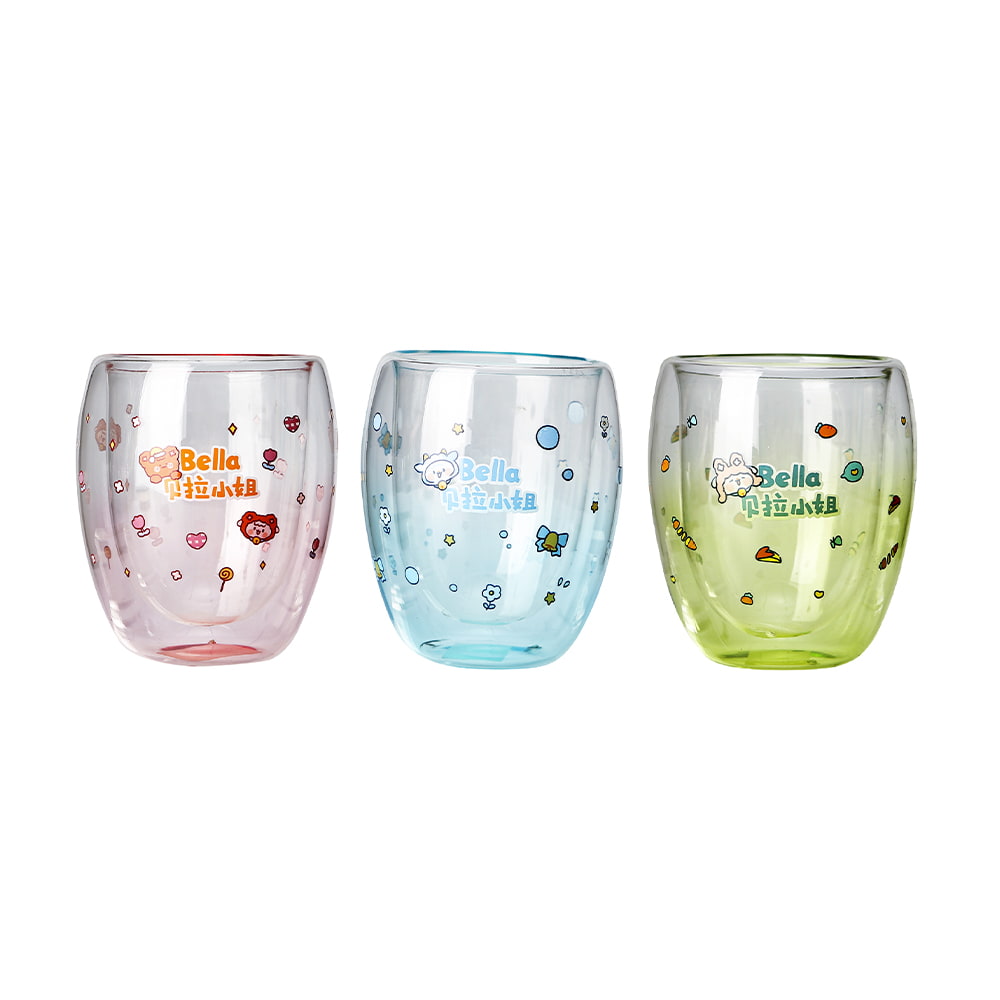 Custom Borosilicate Double Wall Glass Mug Suppliers, OEM/ODM Company - Yangzhou Yangzhou New Coordinate Household Articles Co., Ltd is China OEM/ODM Borosilicate Double Wall Glass Mug suppliers and custom Borosilicate...View Product →
Food storage and preservation
Vacuum storage jars use borosilicate glass bodies because they can tolerate hot filling, cold storage, and repeated washing. A well-sealed glass jar also protects coffee beans, spices, and leftovers from moisture and odor transfer. For buyers looking at storage options, our buyer-oriented glass storage jar guide covers lid selection and wall thickness considerations.
You can see how this material works in a practical product in our borosilicate glass vacuum storage jar with air reducer, which is designed to slow food oxidation after each opening.
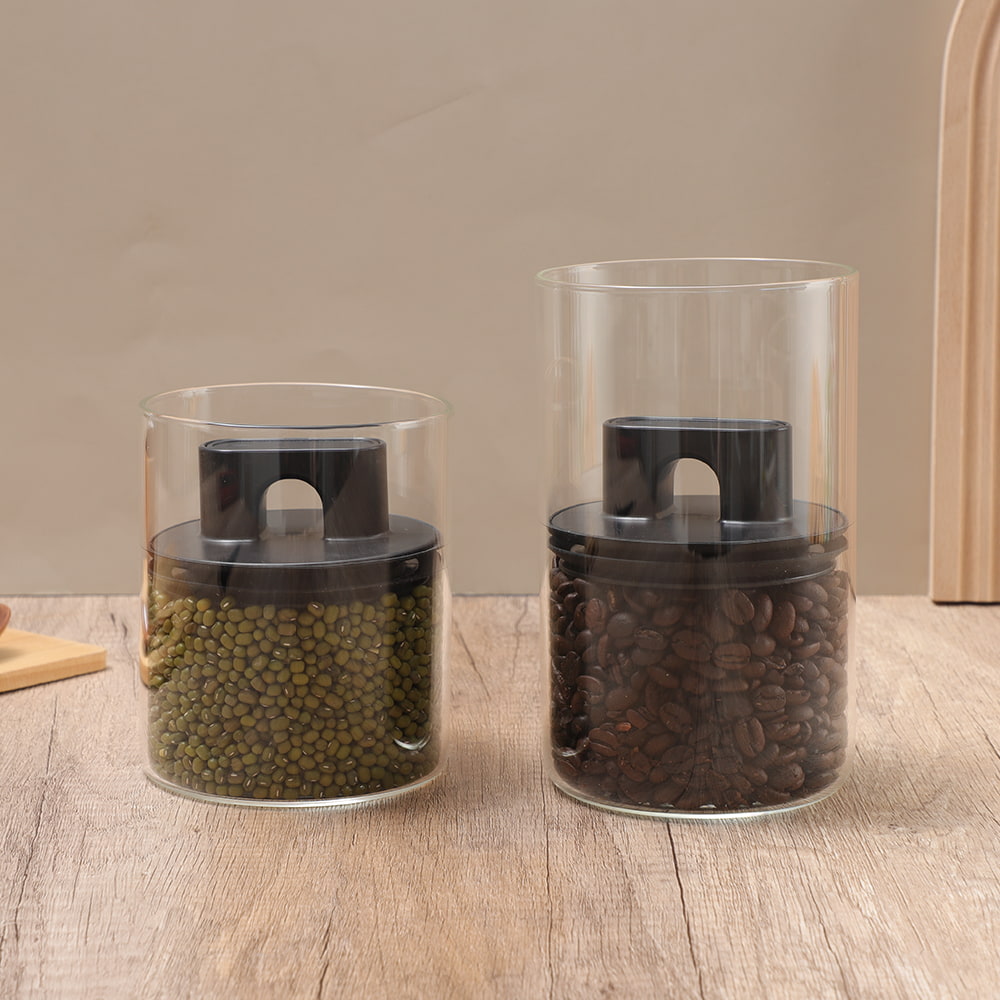 Custom Vacuum Storage Jar - borosilicate glass (Air reducer) Suppliers, OEM/ODM Yangzhou New Coordinate Household Articles Co., Ltd is China OEM/ODM Vacuum Storage Jar - borosilicate glass (Air reducer) suppliers and ...View Product →
Oil, vinegar, and condiment containers
Borosilicate is also an excellent material for oil and vinegar bottles. The glass resists the acid in vinegar and does not release flavors into the oil. An automatic open-and-close bottle with a borosilicate body has a clear advantage in kitchens where speed matters.
A practical example is the borosilicate glass auto-open oil and vinegar bottle, which keeps the pour spout closed between uses and reduces drips.
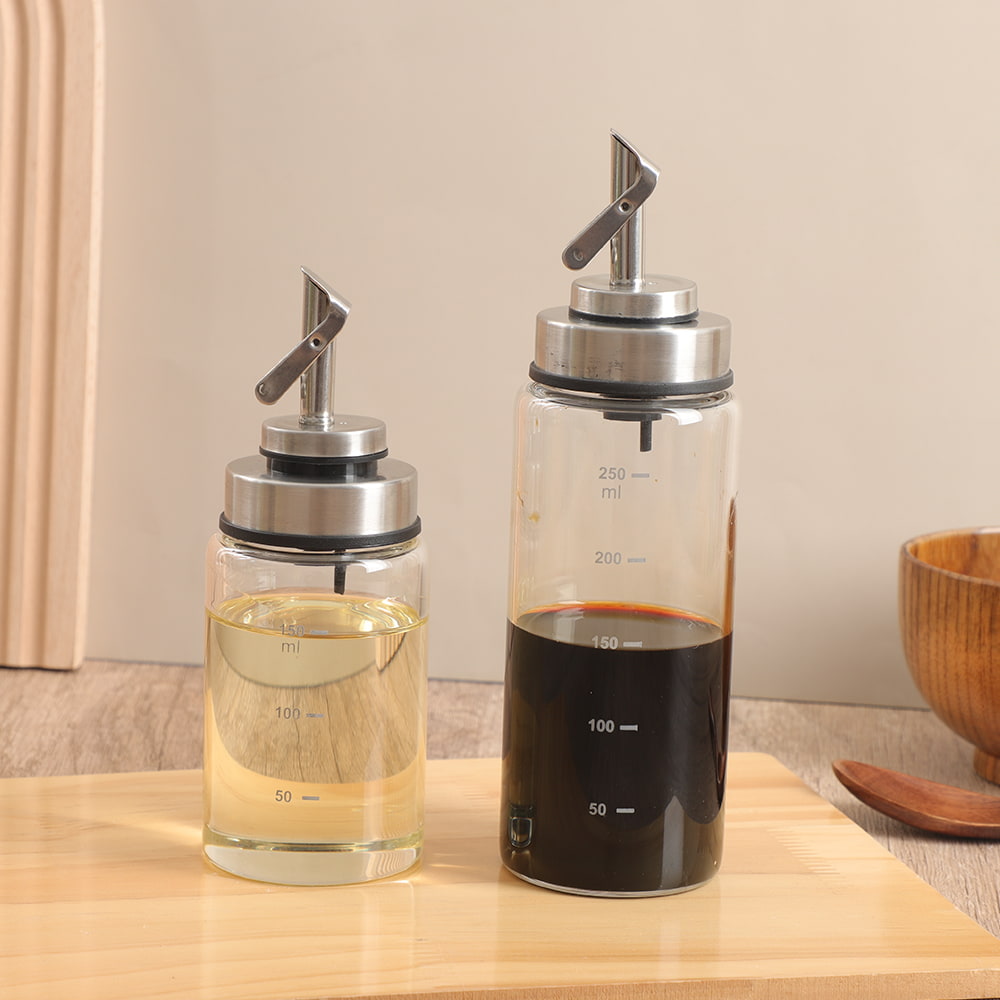 Custom Borosilicate Glass Auto Open Oil/Vinegar Bottle Suppliers, OEM/ODM CompanYangzhou New Coordinate Household Articles Co., Ltd is China OEM/ODM Borosilicate Glass Auto Open Oil/Vinegar Bottle suppliers and custom...View Product →
Laboratory, pharmacy, and lighting
These are the traditional industrial uses: glass beakers, graduated cylinders, pharmaceutical vials, and high-intensity lamp envelopes. The same thermal stability that protects a coffee mug also protects a laboratory flask when it is moved from a burner to a cold bench.
How to Identify Good Borosilicate Glassware
Not every clear glass product that claims heat resistance is true borosilicate. If you are buying for a kitchenware brand or your own household, check for these signs:
- Look for the label. The piece or packaging usually says "borosilicate" or "low expansion glass."
- Check the weight. Borosilicate glass is slightly less dense than soda-lime, so a matching mug often feels lighter than an ordinary one.
- Ask for a datasheet. A reliable supplier will provide the coefficient of thermal expansion and the glass family used in the product.
- Do not trust price alone. Cheap borosilicate is possible, but only if the factory controls the batch composition and annealing carefully.
If your project involves custom shapes or size changes, you can ask our factory about material specifications and sample testing before placing a bulk order.
Care and Cleaning Guidelines
Borosilicate glass is easier to maintain than ordinary glass, but not maintenance-free. Wash it with warm water and a soft sponge. Glass does not trap oils the way plastic does, so you rarely need harsh cleaners.
- Handwashing is safer for double-wall mugs because the small seal between the walls can be damaged by dishwasher steam over time.
- For storage jars, let hot food cool to at least 60 C before closing the lid to avoid pressure buildup.
- Do not use metal scrapers or abrasive pads on printed or painted glass surfaces.
- Check rubber gaskets on airtight jars and replace them if they become brittle.
To extend the life of your glassware, avoid stacking heavy items directly on top of thin-walled cups. Minor scratches may not crack a jar, but they make the next thermal shock more dangerous.
Frequently Asked Questions
- Can borosilicate glass handle boiling water?
Yes. Pouring boiling water into a borosilicate cup or teapot is normal. The glass accepts the sudden temperature rise without cracking, provided it is not already damaged.
- Is borosilicate glass safer than plastic?
For food contact, yes. Borosilicate glass contains no plasticizers, no BPA, and no removable resin lining, so there is nothing to leach into hot liquids or acidic foods.
- Is borosilicate glass unbreakable?
No. It is much more resistant to thermal shock than ordinary glass, but it can still break from a strong impact, a severe scratch, or a manufacturing defect.
- Can borosilicate glass be used in the freezer and microwave?
In most cases, yes. Borosilicate can handle low freezer temperatures and microwave reheating. However, always check the specific product because metal lids, wood lids, or metal accents cannot go in the microwave.
- Is borosilicate glass the same as tempered glass?
No. Borosilicate describes a glass formula, while tempering is a physical strengthening process. A borosilicate piece is not automatically tempered, and a tempered soda-lime piece is not heat-resistant in the same way.
- Does borosilicate glass contain lead?
High-quality borosilicate glass is formulated without lead or cadmium. It is not a lead crystal product, which is another reason it is preferred for food storage and laboratory use.
Bottom Line
Borosilicate glass is a practical investment if you need glassware that can tolerate hot and cold temperatures, resists chemical staining, and stays safe for food contact. It costs more than soda-lime glass, but the lower breakage rate and longer service life often balance the purchase price.
When you source glass products for resale or for your own kitchen, focus on the material composition and the supplier's ability to control annealing. Genuine borosilicate glass will perform, but only if it is made with a consistent batch and careful finishing.
Sources
- Corning Museum of Glass – Material history, composition, and borosilicate glass definition.
- Wikipedia – Borosilicate glass (physical properties and common uses).
- Laboratory glass technical datasheets from established borosilicate glass suppliers (typical coefficient of thermal expansion values).
Recommended Products


- PRODUCT
- Glass Storage Jar
- Glass/Stainless Steel Drinking ware
- Kitchen Seasoning Containers
- Home Decoration
- QUICK LINKS
- Products
- About Us
- Manufacture
- ODM/OEM
- News
- Contact Us
- CONTACT US
-
-
 7 Crystal Boulevard xi’an Feng Town, Baoying County,Jiangsu, China.
 -
 WhatsApp:
+86-15005252638 -
 +86-15005252638
+86-18083766162
+86-15895746638
+86-0514-8866-8898
-
 joy@nchousewares.com
Jack@nchousewares.com
julia@nchousewares.com
-
- CONTACT

