
 English
 日本語
 Deutsch
 Español




How Many Ounces in a Small Mason Jar? Exact Capacities for B2B Packaging Buyers
Content
- 1 A Small Mason Jar Holds 4 or 8 Fluid Ounces
- 2 Small Mason Jar Sizes at a Glance
- 3 Nominal Volume Against Net Fill: Where the Extra Ounces Go
- 4 How to Measure the Ounce Capacity of Any Jar Yourself
- 5 Thread Size and Closure Fit Decide Whether a Small Jar Works
- 6 What Buyers Check Before Ordering Small Glass Jars at Volume
- 7 Where Small Jars Earn Their Place in a Product Line
- 8 Frequently Asked Questions About Small Mason Jar Capacity
- 8.1 How many ounces does a 4 oz mason jar actually hold?
- 8.2 Is an 8 oz mason jar the same as one cup?
- 8.3 Is a half-pint jar considered a small jar?
- 8.4 Why does a jar labelled 8 oz only take 7 oz of product?
- 8.5 How many millilitres is a small mason jar?
- 8.6 Can small jars be used for hot fill products?
- 9 Matching the Jar to the Job
A Small Mason Jar Holds 4 or 8 Fluid Ounces
If the jar in your hand is called small by a supplier, a shelf label, or a packaging catalog, the answer is almost always 4 fluid ounces or 8 fluid ounces. Those two classes cover the overwhelming majority of jars that carry the small label. The 4 fl oz class measures about 118 ml and takes roughly 3.4 to 3.7 fl oz of actual product once headspace is left. The 8 fl oz class measures about 237 ml and takes roughly 6.8 to 7.4 fl oz. A 12 fl oz jar shows up under the same label now and then, but most packaging catalogs file it under medium.
That is the direct answer. The rest of this article explains why the number on the label and the number your filling line records rarely match, and what to check before you commit to a purchase order.
- 4 fl oz mini jar: 118.3 ml nominal, 100 to 110 ml net fill
- 6 fl oz jar: 177.4 ml nominal, 150 to 165 ml net fill
- 8 fl oz half-pint jar: 236.6 ml nominal, 200 to 220 ml net fill
- 12 fl oz half-pint and a half: 354.9 ml nominal, 310 to 335 ml net fill
The conversion is fixed: 1 US fluid ounce equals 29.5735 ml. Multiply the ounce figure by that number and you get millilitres. Divide millilitres by it and you get ounces. Every capacity figure in a glassware catalog traces back to that single constant, which is why a jar sold as 8 oz in the United States is quoted as 237 ml or 240 ml depending on how much the supplier rounds.
Small formats also come in shaped profiles rather than plain cylinders. A decorative small pickle jar keeps the same closed volume class while changing the silhouette, which matters when the jar has to sit on a retail shelf next to taller neighbours.
 Small Size Pickle JarIts smaller size design fits perfectly into the side pocket of the refrigerator. It can be used for marinating food that will be eaten in the short term. A wrap-around...View Product →
Small Mason Jar Sizes at a Glance
The table below puts the four size classes side by side with the metric equivalents and the net fill a typical production run records. Use it as a first filter, then confirm with a physical sample, because mould differences between factories shift the true capacity by 2 to 4 percent.
| Jar class | Nominal capacity | Metric volume | Typical net fill | Common use |
|---|---|---|---|---|
| 4 oz mini | 4 fl oz | 118 ml | 3.4 to 3.7 fl oz | Spices, samples, single desserts |
| 6 oz | 6 fl oz | 177 ml | 5.1 to 5.6 fl oz | Relish, honey, tapenade |
| 8 oz half-pint | 8 fl oz | 237 ml | 6.8 to 7.4 fl oz | Jam, salsa, candles |
| 12 oz tall half-pint | 12 fl oz | 355 ml | 10.2 to 11.1 fl oz | Dips, overnight oats, sauces |
Notice that the 8 oz jar sits close to one US cup. One cup is 8 fl oz exactly, so a half-pint jar fills to about seven cups of liquid once you stop below the threads. If a recipe calls for a cup of fruit and the target jar is a half-pint, expect a small overflow of liquid rather than a missing ingredient.
Nominal Volume Against Net Fill: Where the Extra Ounces Go
A glass jar is sold by the volume it can contain, not by the volume it will hold once it is packed. The difference is headspace, and on a small jar headspace is a large percentage of the total. On a 4 oz jar, leaving a quarter inch of free space removes roughly 0.6 to 0.8 fl oz from the usable fill. That is why a jar marked 4 oz may weigh out at 3.5 oz on a checkweigher and still pass inspection.
Headspace exists for three practical reasons. Product expands when it warms. A vacuum forms when the lid seals and the contents cool. And the sealing surface of the lid must stay clear of the product so the compound can grip the glass rim.
Headspace rules used across the industry
- Jams and jellies: about 1/4 inch
- Fruit and tomato products: about 1/2 inch
- Vegetables, meats and soups: about 1 inch
- Frozen product: 1 inch to 1.5 inches
- Dry goods such as spices: fill level driven, not expansion driven
Wide-mouth jars lose more volume to headspace than regular-mouth jars of the same nominal size, because the opening is wider and the same vertical gap holds more air. A half inch of headspace on an 86 mm opening removes roughly twice the volume that a half inch removes on a 70 mm opening. Buyers comparing two quotations for the same 8 oz jar should check the mouth diameter before assuming the two jars hold the same amount of product.
If you want a broader background on how these containers are built, sealed and reused, this guide to glass storage jars covers the fundamentals before you move into capacity planning.
How to Measure the Ounce Capacity of Any Jar Yourself
Spec sheets drift between suppliers, so the reliable route is to measure the physical sample in front of you. The method takes about ten minutes per SKU and settles every argument about capacity.
- Place the empty jar on a kitchen scale and record the tare weight in grams.
- Fill with water to the very top of the rim, wipe the outside dry, and weigh again. The difference in grams equals the volume in millilitres, because one millilitre of water weighs one gram.
- Divide the millilitre figure by 29.5735 to convert to fluid ounces.
- Repeat the fill only to the intended fill line rather than the rim, then weigh again. That second number is the net fill your line will actually run.
- Test three jars from the same carton and average the results. A spread larger than 3 percent between jars in one carton points to a mould or annealing problem worth raising with the supplier.
The third step is the one that trips people up. Suppliers quote ounces, laboratories report millilitres, and filling lines are programmed in grams. Converting all three into a single unit before the trial run avoids a rejected first batch.
Thread Size and Closure Fit Decide Whether a Small Jar Works
Two jars can both hold 8 fl oz and still be completely incompatible with the same lid. Thread diameter is the variable that decides this, and it is the number most often left off a purchase enquiry.
The two mouth standards
- Regular mouth: approximately 70 mm across the threads. Standard on 4 oz, 6 oz and most 8 oz jars.
- Wide mouth: approximately 86 mm across the threads. Easier to fill and clean, and common on 12 oz and 16 oz formats.
The closure itself matters just as much. A one-piece metal lug cap, a two-piece metal screw band, a wooden lid with a silicone gasket and a plastic screw cap all seal differently, and each one tolerates a different amount of thread variation. When a small jar leaks in transit, the cause is more often a mismatch between the glass thread and the closure than a flaw in the glass itself.
A practical check during sampling: apply the cap by hand until it stops, mark the position, then open and close it twenty times. If the stopping point drifts by more than a few degrees, the thread profile or the gasket compression is inconsistent and the batch will leak on a high-speed line.
What Buyers Check Before Ordering Small Glass Jars at Volume
Capacity is only the first line on a specification sheet. Once the ounce figure is settled, six other numbers decide whether the order runs smoothly on the filling line.
- Capacity tolerance: plus or minus 2 to 3 percent of nominal is a normal band for pressed glassware. Ask for the band in writing.
- Empty weight range: a tight weight spread keeps checkweigher settings stable. A spread wider than 8 grams on a 100-gram jar usually signals inconsistent wall thickness.
- Mouth diameter and thread pitch: must match the capping head already installed on the line.
- Thermal shock resistance: matters for hot fill and for any product that goes through a pasteurisation tunnel.
- Carton configuration and pallet count: a small jar is light, so freight is driven by volume, not weight. Shaving 3 mm off a jar height can add a full layer per pallet.
- Decoration route: frosting, spraying, screen printing and embossing each add lead time and change the unit cost.
For buyers working through a private label programme, the cleanest path is to send the target net fill in millilitres, the intended closure type, and the fill temperature. The factory can then reverse the required nominal capacity and confirm which mould is closest. Send those three details along with your order volume through the contact page and the response usually comes back with a capacity recommendation and a sample timeline.
Where Small Jars Earn Their Place in a Product Line
Small formats are not simply scaled-down versions of larger jars. They carry different products, different shelf economics and different consumer expectations.
Spice and seasoning kits
A 4 oz jar holds roughly 40 to 50 grams of ground spice, depending on density. Ground cumin and paprika pack at different bulk densities, so the same jar fills to different weights. Seasoning sets are usually sold as a matched group, which means every jar in the set has to share the same height and thread so the rack looks intentional.
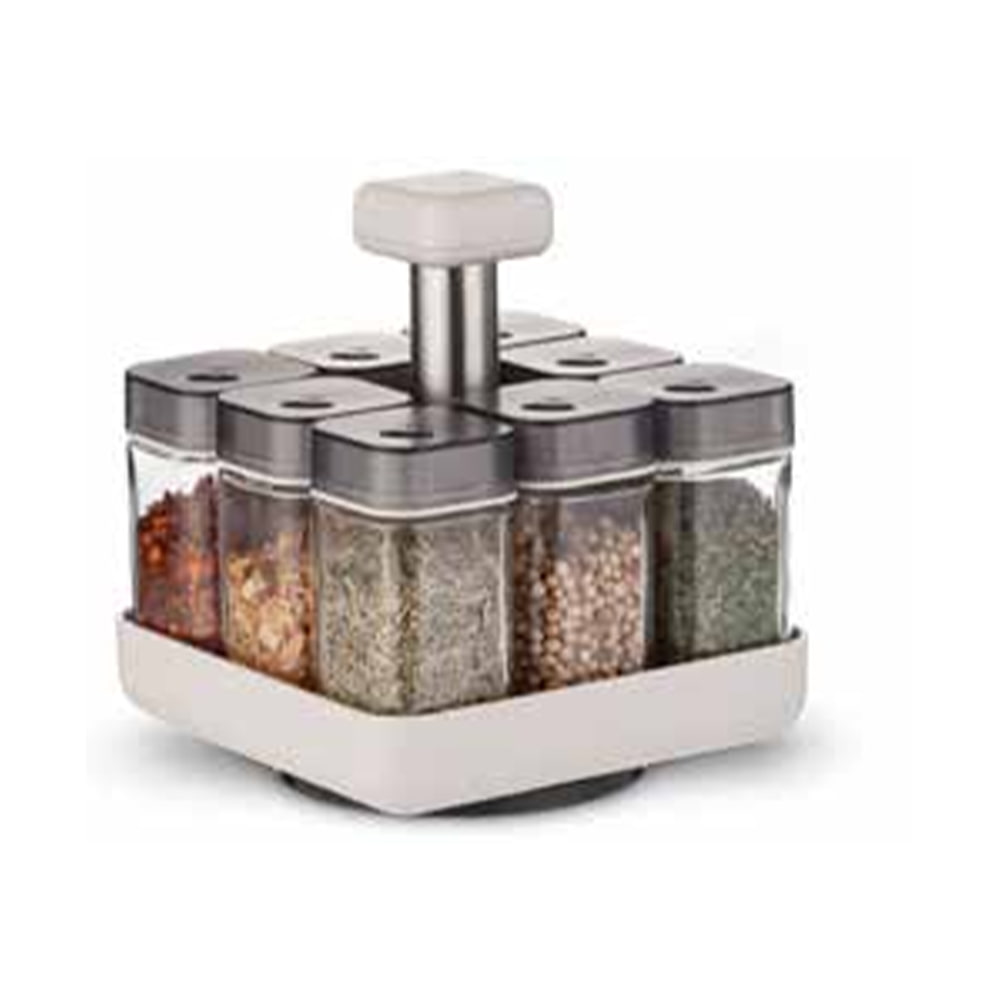 Glass Spice Jar SetGreat Value Combination The sufficient quantity and value combination can fully meet your application and replacement needs in daily life.View Product →
Sealed food containers for kitchens and food service
An 8 oz airtight container works for leftovers, dressings, nuts and cured garnishes. In food service the same size is used for portioned mise en place, where the cook needs a known volume rather than a guess. Air exchange is the limiting factor on shelf life here, not the jar volume, so the gasket and the closure design carry more weight than an extra ounce of capacity.
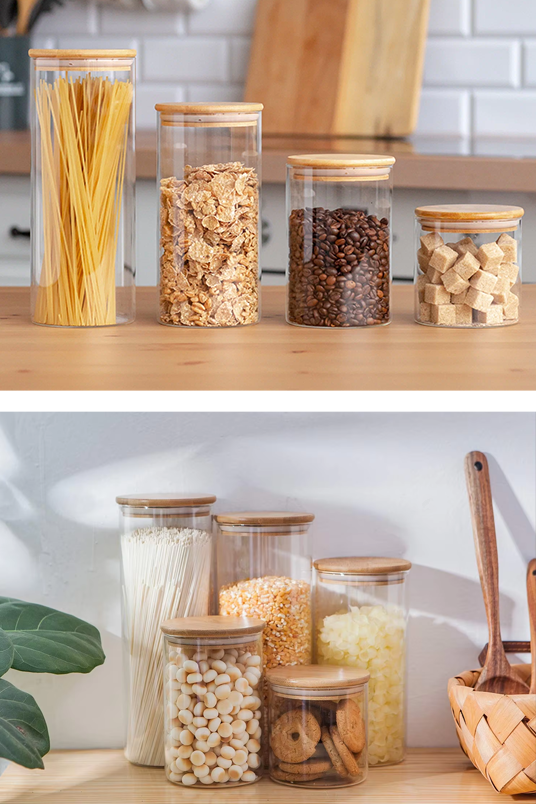 Glass Airtight Food Storage Containers Suppliersinformation to be updatedView Product →
Gifting, samples and travel sizes
A 4 oz jar is the standard sample size for jams, honey, body scrubs and candle tins. The small footprint keeps a gift set affordable, and the low unit weight keeps parcel shipping costs down. Brands that build a sample programme around one jar size usually standardise the closure across the whole range, which simplifies both purchasing and warehousing.
Frequently Asked Questions About Small Mason Jar Capacity
How many ounces does a 4 oz mason jar actually hold?
A 4 oz jar holds 4 fl oz or 118 ml to the rim. Filled to a practical level with headspace left below the threads, it holds about 3.4 to 3.7 fl oz, or 100 to 110 ml. The exact figure depends on how wide the mouth is and how far below the rim the fill line sits.
Is an 8 oz mason jar the same as one cup?
Almost. One US cup is 8 fl oz, and an 8 oz jar holds 8 fl oz to the rim, so it matches a cup only when filled completely. With normal headspace the working volume is about 0.8 of a cup. Recipe writers usually treat a half-pint jar as a cup and let the small difference go.
Is a half-pint jar considered a small jar?
Yes. Half pint equals 8 oz, and in retail and packaging language 8 oz sits firmly inside the small group. The next size up, a pint at 16 fl oz, is usually described as medium or standard rather than small.
Why does a jar labelled 8 oz only take 7 oz of product?
The label reports the jar volume, not the packed weight. Leaving headspace for expansion and for the vacuum that forms during sealing removes roughly 8 to 15 percent of the nominal volume. On a small jar that percentage represents a visible difference on the scale.
How many millilitres is a small mason jar?
A 4 oz jar is 118 ml, a 6 oz jar is 177 ml, an 8 oz jar is 237 ml and a 12 oz jar is 355 ml. All figures come from multiplying the ounce value by 29.5735 and rounding to the nearest whole millilitre.
Can small jars be used for hot fill products?
They can, provided the glass is rated for the temperature swing and the headspace is set for thermal expansion. A small jar with a narrow mouth cools faster than a large jar, so the vacuum forms quickly. That is convenient for sealing, but it also means the fill temperature and the headspace have to be matched carefully during the trial run.
Matching the Jar to the Job
The question of how many ounces sit in a small mason jar has a short answer and a long tail. The short answer is 4 oz or 8 oz for nearly every jar that carries the label. The long tail covers headspace, mouth diameter, thread pitch, empty weight spread and the fill temperature your line will run.
Buyers who settle the nominal capacity first and then work backwards through headspace and closure type avoid the most expensive mistake in small-format packaging, which is ordering a container that holds the right volume but will not seal on the capping head already installed. Measuring one physical sample and converting the result with the 29.5735 constant takes ten minutes and removes most of that risk.
Whether the target is a 4 oz spice jar, an 8 oz airtight container or a shaped pickle jar, the process is the same: define the net fill, define the closure, then confirm which glass body meets both. Do that and the ounce figure on the spec sheet stops being a negotiation and starts being a specification.
Recommended Products


- PRODUCT
- Glass Storage Jar
- Glass/Stainless Steel Drinking ware
- Kitchen Seasoning Containers
- Home Decoration
- QUICK LINKS
- Products
- About Us
- Manufacture
- ODM/OEM
- News
- Contact Us
- CONTACT US
-
-
 7 Crystal Boulevard xi’an Feng Town, Baoying County,Jiangsu, China.
-
 WhatsApp:
+86-15005252638 -
 +86-15005252638
+86-18083766162
+86-15895746638
+86-0514-8866-8898
-
 joy@nchousewares.com
Jack@nchousewares.com
julia@nchousewares.com
-
- CONTACT

