
 English
 日本語
 Deutsch
 Español




How Many Holes Does a Pepper Shaker Have? The Answer and Why It Matters
Content
- 1 The Short Answer: Three Holes for Pepper
- 2 Why Pepper Shakers Need More Holes Than Salt Shakers
- 3 Hole Patterns Across Common Shaker Sets
- 4 How to Identify Unmarked Salt and Pepper Shakers
- 5 Exceptions, Regional Differences, and Modern Designs
- 6 What to Look for When Buying Salt and Pepper Shakers
- 7 Beyond Salt and Pepper: Using Shakers for Other Spices
- 8 How to Clean and Maintain Glass Shakers
- 9 Frequently Asked Questions About Pepper Shaker Hole Counts
- 9.1 How many holes does a standard pepper shaker have?
- 9.2 Why does the pepper shaker have more holes than the salt shaker?
- 9.3 Is it always three holes for pepper?
- 9.4 How can I tell which shaker is which when the set is not labeled?
- 9.5 Can I use a salt shaker to hold pepper?
- 9.6 What material is best for shaker lids?
You pick up a glass shaker, tilt it over your plate, and pause. Is this the salt or the pepper? After more than a century of tabletop design, the answer has settled into a clear convention: the pepper shaker has three holes, while the salt shaker has one or two. This rule holds across the vast majority of modern tableware sets, and knowing why it exists will help you identify shakers in seconds, choose the right set for your kitchen, and season food with confidence.
The Short Answer: Three Holes for Pepper
The conventional rule in Western tableware is simple: pepper gets more holes than salt. The most common configuration on store shelves is:
- Pepper shaker: 3 holes, occasionally 4
- Salt shaker: 2 holes, sometimes 1
A widely taught memory trick explains it this way: the word PePPer contains three letter P's, so pepper gets three holes. Salt is a shorter word, so it gets fewer holes. These mnemonics are not official standards, but they reflect a functional logic that shaker manufacturers have followed for generations. When you encounter a two-piece shaker set, you can safely assume the top with more holes holds pepper.
Why Pepper Shakers Need More Holes Than Salt Shakers
The hole count is not about tradition alone; it is about matching the flow rate of each spice. Salt and pepper differ in particle size, density, and how easily they move through small openings, and manufacturers design every lid based on those differences.
Table salt is typically fine and free-flowing when dry. A small opening allows a controlled stream of salt to fall onto food. If a salt shaker had three or four generous holes, it would flood your meal with sodium in a single tilt. Pepper, especially freshly ground black pepper, consists of irregular, fibrous particles that are lighter than salt crystals. These particles do not flow smoothly; they clump, stick, and bridge across openings. More holes means more total open area, which gives pepper a fair chance of coming out at a usable rate.
| Characteristic | Salt Shaker | Pepper Shaker |
|---|---|---|
| Hole count | 1 or 2 | 3, sometimes 4 |
| Average particle size | 0.2-0.5 mm, uniform | 0.5-1.0 mm, irregular |
| Flow behavior | Flows freely through small holes | Tends to clump and bridge |
| Shaking intensity | Light tap usually enough | Firm shake needed |
The functional argument is respected throughout the industry. Factories that produce glass condiment shakers intentionally use smaller tops for salt and larger multi-hole tops for pepper. This consistency across manufacturers is what makes the three-hole convention so reliable in everyday kitchens.
Hole Patterns Across Common Shaker Sets
Although three holes is the most common pepper configuration, you will encounter variations depending on the set's era, country of origin, and manufacturer. Knowing the whole range prevents confusion when you travel or buy second-hand shakers.
| Pattern | Salt Holes | Pepper Holes | Where Commonly Seen |
|---|---|---|---|
| Classic diner set | 2 | 3 | Most restaurants, homes |
| Minimalist set | 1 | 3 | Modern cafes, hotel room service |
| Heavy-duty set | 2 | 4 | Commercial kitchens, BBQ sets |
| Antique or single-hole set | 1 | 2 | Vintage shops, pre-1950 sets |
The pattern that is evening out the fastest today is two holes for salt and three holes for pepper. It has become the default for factory-made glass shaker sets, and it is the configuration most chefs expect to see.
How to Identify Unmarked Salt and Pepper Shakers
Many shaker sets do not carry the letters S and P. If you are facing two identical containers, these methods will help you tell them apart quickly.
- Count the holes. The shaker with more holes is almost always the pepper shaker. Two vs. three means salt and pepper, respectively.
- Look at the base before filling. Some sets have tiny painted dots or a subtle groove on the base ring distinguishing the two pieces.
- Check the rim seal. Pepper shakers sometimes have a plastic or cork inner liner to absorb moisture, while salt shakers rarely do.
- Weigh the shakers when empty. A slightly heavier body or a thicker base often signals the pepper shaker because older designs gave pepper extra wall thickness to keep moisture out.
- Shake a tiny amount onto a dark plate. White fine grains are salt; dark or speckled coarse bits are pepper. This test ends all doubt.
When these clues conflict, trust the hole count first. It is the strongest signal across brands, materials, and price levels.
Exceptions, Regional Differences, and Modern Designs
The three-hole rule applies to standard Western shaker sets, but exceptions exist. In some European countries, salt shakers are designed with a single large hole at the center or a series of small holes arranged in a ring to suit denser sea salt. In Japan, where shakers are often called spice containers, pepper is frequently sold pre-ground in taller bottles with a single large opening rather than a sprinkle top.
Modern designs also shift the convention. Airtight shakers with flip caps or pop-up lids sometimes use identical hole patterns on both sides, forcing manufacturers to compensate with a colored band or a different body shape. Some premium grinders are sold as shakers even though they mill pepper on demand; those do not have fixed holes at all.
What matters for the buyer is simple: check the lid before you fill the shaker. The hole count is a reliable guide only when the set follows the classic convention, and most do.
What to Look for When Buying Salt and Pepper Shakers
Whether you are stocking a home kitchen or sourcing shakers for a restaurant, these five factors matter more than the hole pattern alone.
- Lid material. Salt accelerates corrosion on steel. Stainless steel lids are fine if they are coated; glass or ceramic lids last longest.
- Moisture resistance. Look for a silicone gasket or cork liner that seals the rim when the shaker is inverted.
- Capacity. A 100-150 ml shaker suits a household of four. Commercial units run 200 ml and above.
- Visibility. Transparent glass lets you see fill level and spice freshness at a glance.
- Easy refill. A wide mouth with a knurled interior edge makes refilling and cleaning noticeably easier.
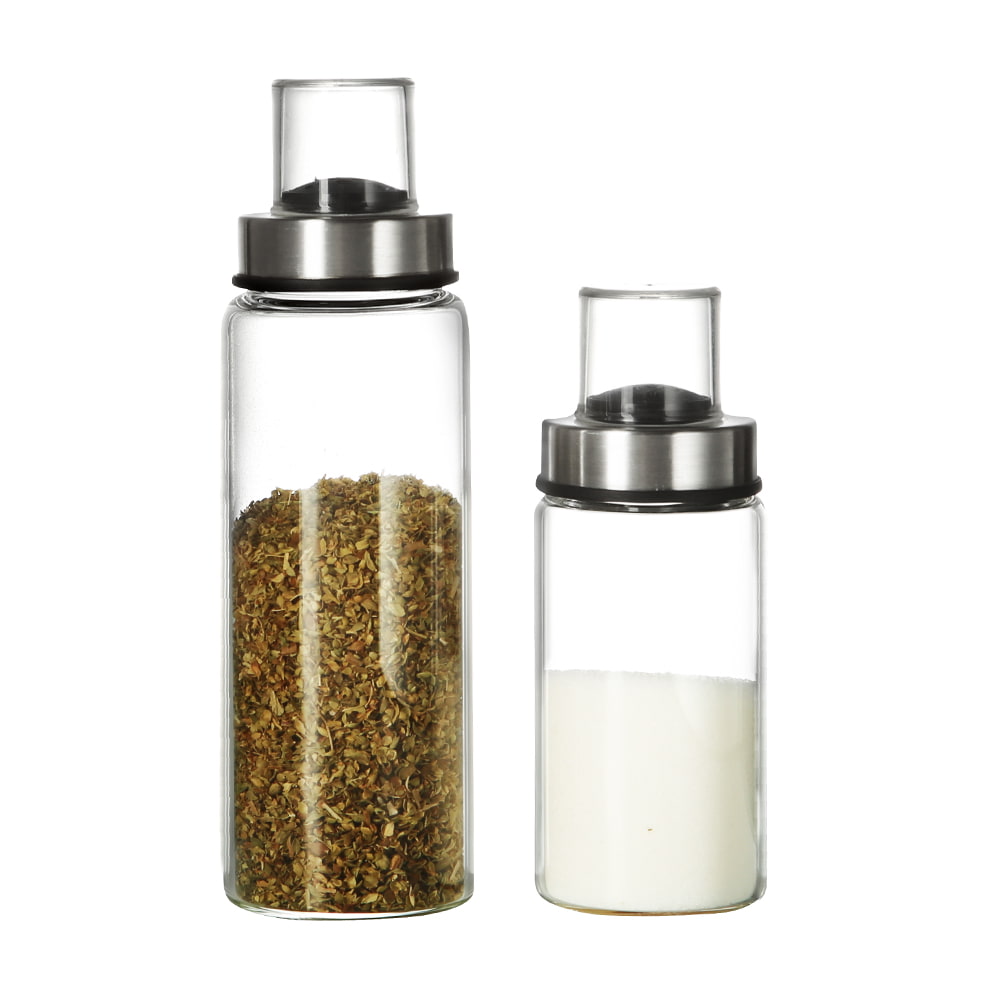 Clear Glass Seasoning Shakers with Lids for Kitchen and Outdoor UseThis set of lead-free glass shakers offers visible refill levels and airtight lids to keep spices fresh. Its wide opening simplifies filling, making it a practical choice for home cooks and restaurant supplies alike.View Product →
For a more detailed look at how to select the right condiment containers for your needs, read our comprehensive guide to condiment jars and shakers. You will find comparisons of lid types, material options, and maintenance advice.
Beyond Salt and Pepper: Using Shakers for Other Spices
Shaker sets are not limited to salt and pepper. Once you understand the logic of hole counts, you can apply the same principle to paprika, garlic powder, dried herbs, and even sugar.
Paprika and other finely ground spices behave much like salt and need a single or double hole. Dried oregano, thyme, and rosemary flakes behave like pepper and need three or four holes to flow freely. A glass spice jar set lets you label each jar while keeping the matching lid on the correct container.
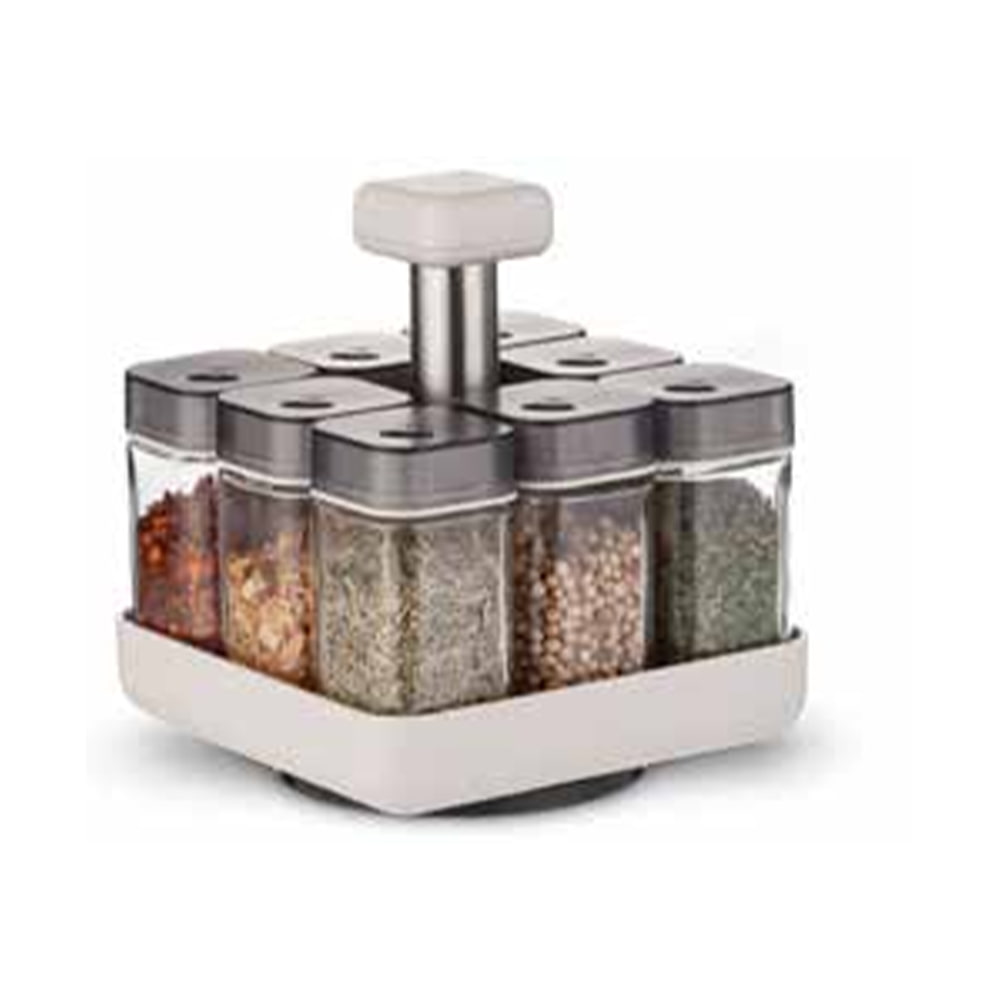 Glass Spice Jar Set with Wood or Stainless Steel TrayThis versatile jar set provides various capacities and tight-sealing lids, ideal for storing finely ground spices and dried herbs. The included tray helps organize labeled jars, addressing the need for separate shakers with different hole patterns.View Product →
When using shakers for multiple spices, avoid cross-contamination by washing and fully drying the shaker between refills. Residual moisture is the main cause of clumped spice and blocked holes.
How to Clean and Maintain Glass Shakers
A pepper shaker with blocked holes is frustrating. Regular cleaning prevents clogging and keeps the flow consistent.
- Empty and wipe weekly. Old pepper oil can turn rancid and stick to the lid.
- Wash the lid by hand. Use warm water and a mild dish soap. Avoid the dishwasher; repeated cycles can warp plastic and dull the coating on metal lids.
- Clear holes with a toothpick. Push gently through each hole to remove compacted powder.
- Dry completely before refilling. Moisture is the number one cause of clumping inside glass shakers.
For shakers with wooden or cork parts, wipe only the exterior and never soak them. The wood will eventually swell and prevent the lid from sealing.
Frequently Asked Questions About Pepper Shaker Hole Counts
How many holes does a standard pepper shaker have?
A standard pepper shaker has three holes, while a standard salt shaker has two. Some pepper shakers have four holes, particularly in commercial sets designed for heavy use.
Why does the pepper shaker have more holes than the salt shaker?
Pepper particles are larger, lighter, and more irregular than salt crystals, so they do not flow as easily through small openings. More holes give pepper enough total opening area to exit at a usable rate. Salt, which flows freely even through tiny holes, needs fewer openings to control the amount released.
Is it always three holes for pepper?
No. The three-hole configuration is the most common in Western tableware, but four-hole pepper tops exist, and some vintage sets use a two-hole top for pepper. The rule is that the pepper shaker always has at least as many holes as the salt shaker, and usually more.
How can I tell which shaker is which when the set is not labeled?
Count the holes first. The shaker with the higher hole count is the pepper shaker in a conventional set. Shaking a small amount onto a dark plate also confirms the identity: white crystalline grains are salt, and dark coarse flecks are pepper.
Can I use a salt shaker to hold pepper?
You can, but the flow will be slow and frustrating. A one- or two-hole top restricts pepper too much, so you will end up shaking hard and getting very little out. For a better result, dedicate the three-hole top to pepper and the single- or double-hole top to salt.
What material is best for shaker lids?
Stainless steel is durable and looks neat, but salt can corrode it over time if the protective coating wears off. Glass and ceramic lids resist corrosion completely and are the safest low-maintenance option. For high humidity kitchens, look for a lid with a silicone gasket to keep moisture out of the pepper.
Knowing that the pepper shaker carries three holes saves you from a moment of hesitation every single meal. It also helps you choose better shakers, explain the design to guests, and even source the right products for your business. If you are a restaurant owner, wholesaler, or home cook looking for durable, well-designed glass seasoning shakers, our team is happy to discuss your requirements. Contact us with your preferred hole pattern and capacity, and we will guide you through the options.
Recommended Products



- PRODUCT
- Glass Storage Jar
- Glass/Stainless Steel Drinking ware
- Kitchen Seasoning Containers
- Home Decoration
- QUICK LINKS
- Products
- About Us
- Manufacture
- ODM/OEM
- News
- Contact Us
- CONTACT US
-
-
 7 Crystal Boulevard xi’an Feng Town, Baoying County,Jiangsu, China.
-
 WhatsApp:
+86-15005252638 -
 +86-15005252638
+86-18083766162
+86-15895746638
+86-0514-8866-8898
-
 joy@nchousewares.com
Jack@nchousewares.com
julia@nchousewares.com
-
- CONTACT

