
 English
  日本語
日本語  Deutsch
  Español




How Long Does Dry Dog Food Last in an Airtight Container?
Content
- 1 Why Airtight Storage Matters More Than the Expiration Date
- 2 How Long Does Dry Dog Food Actually Last — A Clear Breakdown
- 3 Glass Storage Jars vs. Plastic Containers: Which One Wins for Dog Food
- 4 The Role of Temperature and Humidity in Dry Dog Food Shelf Life
- 5 Should You Store Kibble in the Original Bag Inside the Container?
- 6 Signs That Dry Dog Food Has Gone Bad — Even Inside a Sealed Container
- 7 How to Clean and Maintain a Glass Storage Jar for Dog Food
- 8 Buying the Right Amount of Dry Dog Food for Your Household
- 9 Common Mistakes Pet Owners Make With Dry Dog Food Storage
- 10 Frequently Asked Questions About Dry Dog Food Shelf Life
- 10.1 Can dry dog food go bad before the expiration date?
- 10.2 Is it safe to refrigerate dry dog food?
- 10.3 How do I know if my glass storage jar is truly airtight?
- 10.4 Can I use the same glass storage jar for different types of dog food?
- 10.5 What size glass storage jar do I need for a standard 2 kg bag of dry dog food?
Dry dog food stored in a properly sealed Glass Storage Jar or airtight container typically lasts 6 to 8 weeks after opening, while an unopened bag can stay fresh for 12 to 18 months from the manufacturing date. Storage conditions — temperature, humidity, and light exposure — play a bigger role in shelf life than most pet owners realize. The moment a bag is opened and exposed to air, oxidation begins, and the clock starts ticking on nutrient quality and palatability.
Why Airtight Storage Matters More Than the Expiration Date
The "best by" date printed on dog food packaging is calculated assuming the bag remains sealed and stored correctly. Once you open the bag, that date becomes largely irrelevant. Oxygen, moisture, and airborne bacteria begin degrading the kibble almost immediately. Fats in dry dog food are particularly vulnerable to oxidative rancidity — a process that not only makes food taste stale but can also reduce the potency of fat-soluble vitamins like A, D, E, and K.
Studies on dry pet food storage have shown that kibble exposed to open air loses measurable vitamin E content within just 2 to 4 weeks. This isn't just a palatability issue; it can affect the nutritional completeness of your dog's diet over time. Switching to a sealed container the moment you open a new bag is one of the simplest ways to protect that investment.
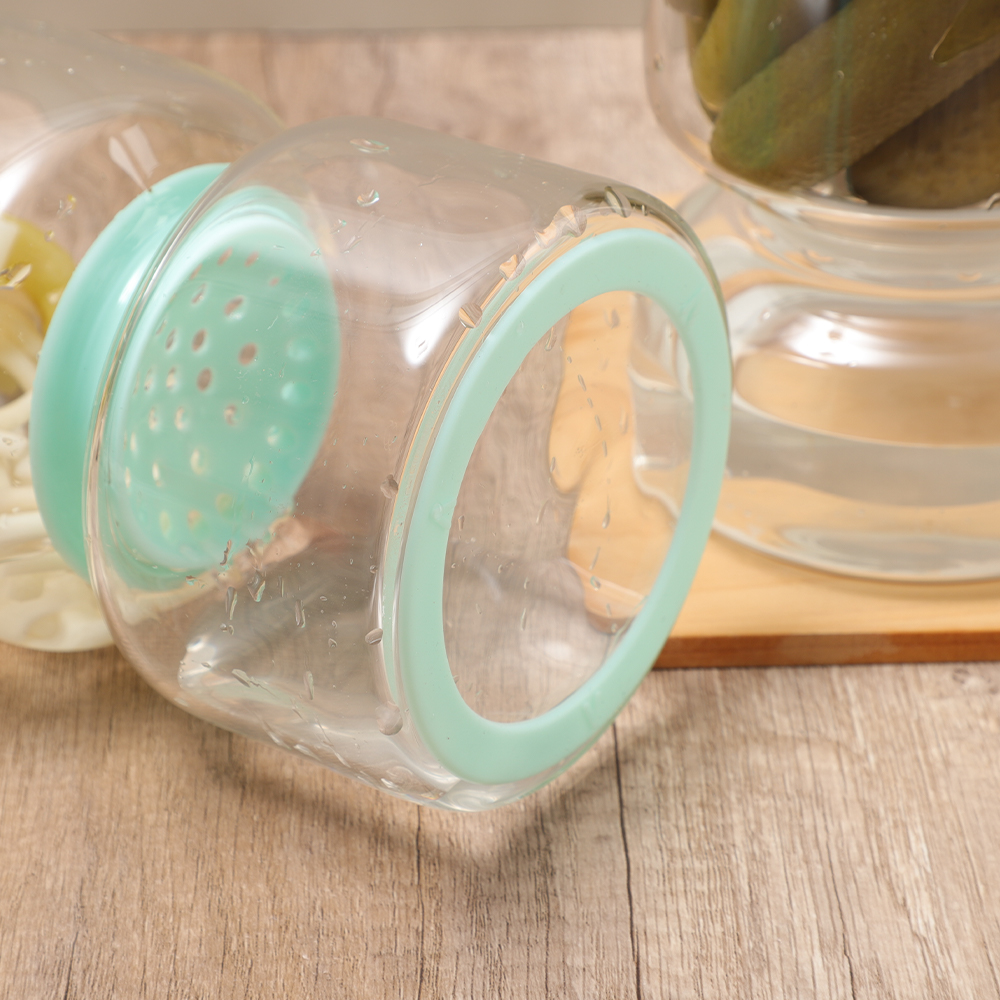
An airtight glass storage jar creates a virtually oxygen-free environment when sealed correctly. Unlike plastic containers that can develop micro-scratches over time — harboring bacteria and absorbing odors — glass is non-porous, meaning it does not interact chemically with the food inside and is far easier to fully sanitize between uses.
How Long Does Dry Dog Food Actually Last — A Clear Breakdown
Different storage situations produce very different outcomes. Here is a straightforward reference based on common storage scenarios:
| Storage Condition | Estimated Shelf Life | Key Risk Factor |
|---|---|---|
| Unopened original bag (cool, dry location) | 12–18 months | Heat and humidity over time |
| Opened bag, rolled and clipped | 2–3 weeks | Air infiltration, moisture |
| Opened bag poured into plastic bin (no seal) | 3–4 weeks | Residual grease buildup |
| Airtight glass storage jar (cool, dark location) | 6–8 weeks | Minimal — best option |
| Airtight container in warm kitchen (above 25°C) | 4–5 weeks | Accelerated fat oxidation |
These figures assume food that was within its printed best-by date when first opened. Starting with food that is close to expiration significantly reduces these timeframes, regardless of how well it is stored afterward.
Glass Storage Jars vs. Plastic Containers: Which One Wins for Dog Food
This comparison comes up frequently, and the answer depends partly on how seriously you take the freshness and safety of your pet's food. Here is an honest evaluation of both options.
The Case for Glass Storage Jars
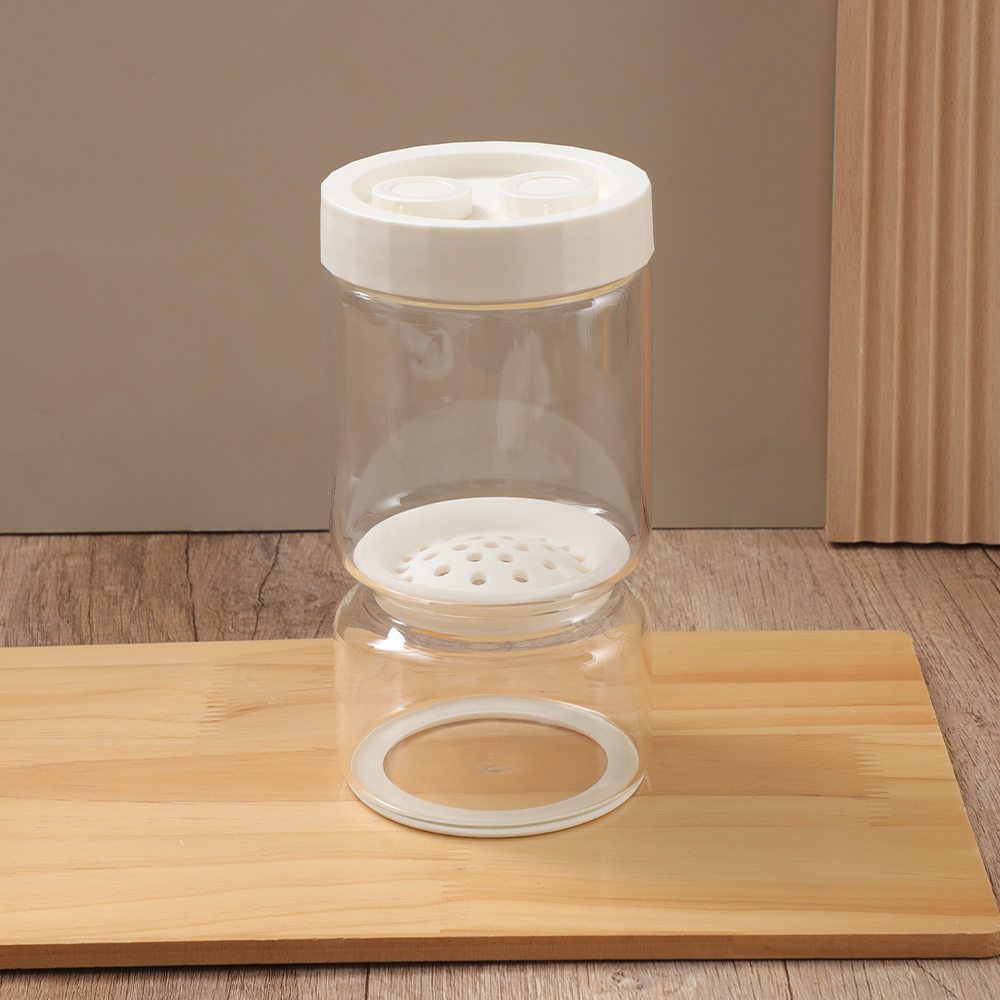
A glass storage jar with a rubber-gasket lid or clamp closure creates one of the most reliable airtight seals available for dry food storage at home. The material itself has several advantages that plastic simply cannot match:
- Glass is completely non-porous, so it will never absorb food odors, pet smells, or cleaning product residue.
- It does not leach chemicals into food, even over extended storage periods.
- Glass storage jars can be sanitized in a dishwasher at high temperatures, eliminating bacterial buildup between uses.
- They are scratch-resistant, which matters because scratches in plastic containers create microscopic pockets where old kibble oils and bacteria accumulate.
- High-quality glass storage jars are visually transparent, making it easy to monitor remaining food levels and spot early signs of mold or insect contamination.
Where Plastic Containers Fall Short
Standard plastic pet food containers — the large flip-top bins sold at most pet stores — are convenient but come with real drawbacks. Over time, oils from kibble seep into the plastic walls, going rancid and contaminating each new batch of food poured in. Most plastic containers are also not genuinely airtight; their lids create a friction seal rather than a pressure seal, which allows slow air exchange.
If you do use plastic, food-grade HDPE or BPA-free containers with gasket lids are a safer choice than generic bins. Wash them thoroughly — ideally with a diluted white vinegar rinse — between every bag of food.
Practical Sizing for a Glass Storage Jar
For most households, a glass storage jar with a capacity of 3 to 5 liters works well for a 1.5 to 2 kg bag of kibble. Larger breeds eating 4–6 cups per day may require multiple jars or a larger vessel. The goal should be to use a jar that gets emptied within 4 to 6 weeks — so size down rather than up if possible, to avoid long-term storage in the same batch.
The Role of Temperature and Humidity in Dry Dog Food Shelf Life
Airtight containment solves the oxygen problem, but temperature and moisture are independent variables that can undermine even the best storage container. Understanding how these factors work helps explain why the same jar of kibble might last 8 weeks in one home and only 4 weeks in another.
Temperature: The Quiet Accelerator
Heat speeds up almost every chemical reaction, including the oxidation of fats in kibble. Storing dry dog food above 25°C (77°F) can cut shelf life by 30 to 50% compared to storage at 18–20°C. This is why placing your glass storage jar near the stove, on top of the refrigerator, or in a garage that heats up in summer is a poor choice, even if the jar itself is sealed perfectly.
The ideal storage temperature for dry dog food is between 15°C and 21°C (60°F to 70°F). A kitchen pantry, a dedicated cabinet away from appliances, or a cool utility room all qualify. In summer months, consider whether your storage location maintains that temperature range consistently.
Humidity and Moisture: The Mold Risk
Kibble has a low moisture content — typically between 8% and 12% — which is one of the reasons it is shelf-stable compared to wet or raw food. However, if moisture infiltrates the storage container, that equilibrium shifts rapidly. Humidity above 70% relative humidity (RH) creates conditions favorable for mold growth within days on exposed kibble.
Glass storage jars sealed with silicone or rubber gaskets are excellent at excluding external humidity. The concern with glass specifically is condensation: if a cold jar is moved to a warm room, condensation can form inside when the lid is opened. Always allow a cold glass storage jar to come to room temperature before opening to avoid introducing moisture.
Light Exposure: The Overlooked Factor
UV light degrades vitamins and accelerates fat oxidation. Clear glass storage jars look attractive on a shelf, but if they are positioned near a window or under direct lighting, the food inside experiences continuous low-level degradation. Store glass jars in a closed cabinet or pantry whenever possible, or choose amber-tinted glass storage jars which filter out a significant portion of UV radiation.
Should You Store Kibble in the Original Bag Inside the Container?
This question divides pet owners, and the answer has a nuance worth understanding. Some pet nutritionists and veterinarians recommend keeping the kibble in the original bag and placing the entire bag inside the glass storage jar or airtight container, rather than pouring the food directly in.
The reasoning: the original packaging contains preservative gas (typically nitrogen) that continues to provide some protection even after the bag is opened. The bag itself also carries the batch number, manufacturing date, and specific best-by date — information that matters if there is ever a product recall. When you pour kibble directly into a jar, you lose that traceability.
The counterpoint: most home-sized glass storage jars cannot accommodate a full original bag. In practice, the best compromise is to cut out the label and store it inside the jar, and to make sure the jar is fully cleaned and dried before adding a new batch. This maintains traceability while still benefiting from the airtight seal.
Signs That Dry Dog Food Has Gone Bad — Even Inside a Sealed Container
Airtight storage slows degradation but does not halt it entirely. Knowing what spoiled kibble looks, smells, and feels like is essential for any pet owner. Using food that has gone rancid or developed mold can cause gastrointestinal upset, vomiting, diarrhea, and in severe cases, mycotoxin poisoning.
- Off smell: Fresh kibble has a mild, slightly savory smell. Rancid food smells sour, like old cooking oil, or has a sharp, chemical odor. Trust your nose — if it smells wrong to you, it will definitely smell wrong to your dog.
- Visible mold: White, green, or gray fuzzy patches on individual kibble pieces are an immediate discard signal. Mold spread through a batch is not always visible; if you spot even a small amount, the entire container should be emptied and cleaned.
- Unusual texture: Kibble that feels soft, sticky, or clumped together has absorbed moisture. This is a precursor to mold growth and a sign the food should not be used.
- Insects or larvae: Grain weevils and pantry moths can penetrate weakly sealed containers. A glass storage jar with a proper seal is an effective barrier, but check periodically for any signs of infestation, particularly in warmer months.
- Your dog refuses to eat it: Dogs are sensitive to rancidity and will often reject food that has deteriorated. While some dogs are picky for other reasons, a sudden refusal of a normally accepted food is worth taking seriously.
How to Clean and Maintain a Glass Storage Jar for Dog Food
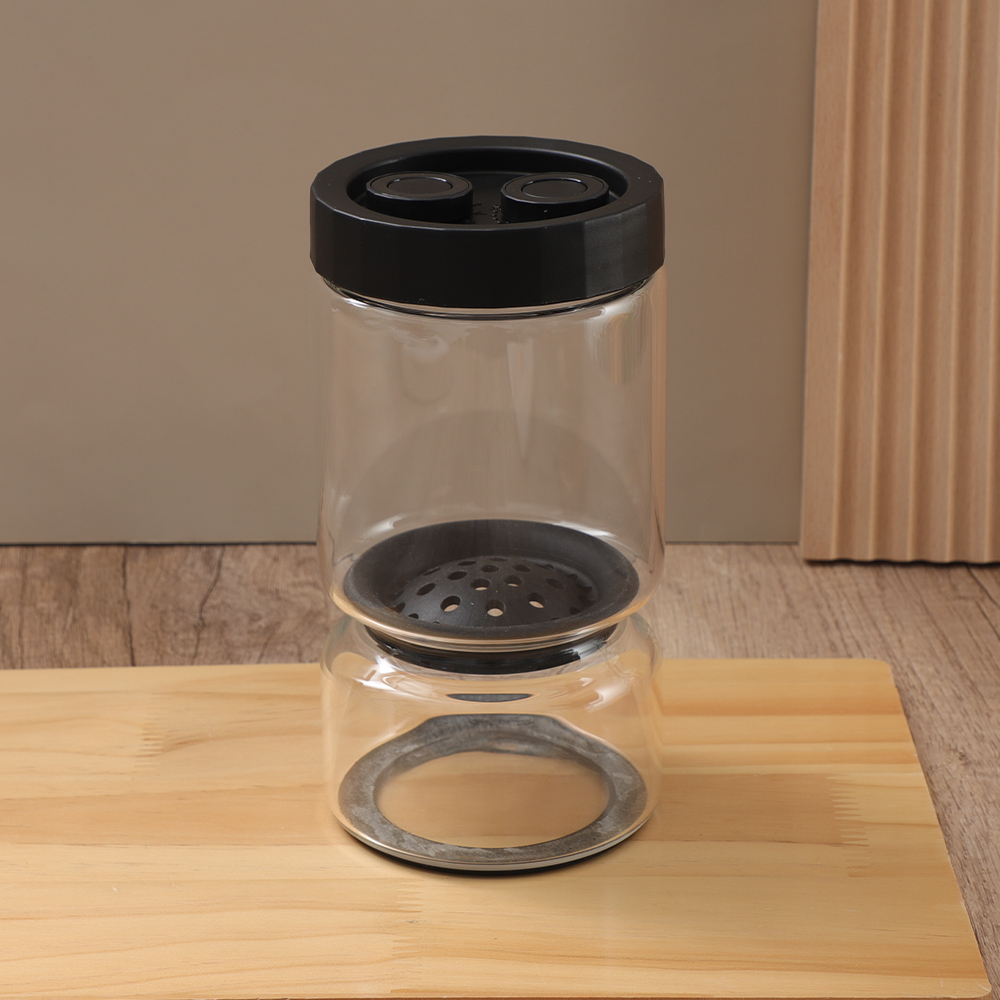
The advantage of glass over plastic in terms of hygiene only holds if the jar is cleaned properly between uses. Many pet owners skip this step, pouring a new bag of food on top of residue from the previous batch — a practice that can contaminate fresh kibble with rancid oils.
- Empty the jar completely before adding new food. Never top off an existing supply without first using up or removing what is already inside.
- Wash with hot water and unscented dish soap. Scented soaps leave residue that can affect the food's smell and deter finicky dogs from eating.
- Rinse with a diluted white vinegar solution (1 part vinegar to 4 parts water) to neutralize any lingering fat oxidation odors.
- Allow the jar to air dry completely — ideally 24 hours upside down on a clean rack — before adding food. Even a small amount of residual moisture is enough to accelerate mold growth.
- Inspect the gasket or seal each time. Rubber gaskets can crack or warp over time, compromising the airtight seal. Replace gaskets annually or whenever you notice visible damage.
For glass storage jars that are dishwasher safe — most borosilicate glass containers are — running them through a full hot cycle provides an effective sanitization. Check manufacturer guidelines to confirm dishwasher compatibility, particularly for the lid and gasket components.
Buying the Right Amount of Dry Dog Food for Your Household
The best storage in the world cannot compensate for buying more food than your dog will eat within a reasonable window. Many pet owners are tempted by bulk pricing — a 15 kg bag at significant savings per kilogram — without calculating whether their dog will actually consume that much food before quality declines.
A simple calculation: take your dog's daily feeding amount (in cups or grams), and divide the bag weight by that figure. A medium-sized dog eating 300g per day will go through a 5 kg bag in approximately 16 days. A 15 kg bag would last 50 days — well beyond the 42-day (6-week) recommended window for food stored in a glass storage jar or airtight container.
For large breeds or multi-dog households, bulk buying makes sense. For small breeds or single-dog homes, buying smaller bags more frequently is genuinely better for your dog's nutrition than chasing per-kilogram savings on large bags that sit for months. The nutritional loss in oxidized, stale kibble likely outweighs any price advantage.
If bulk buying is necessary, consider dividing the food into multiple glass storage jars — using one at a time while keeping the others sealed. This limits the air exposure of the reserve stock and helps each jar stay within the optimal 4 to 6 week consumption window.
Common Mistakes Pet Owners Make With Dry Dog Food Storage
Even well-intentioned pet owners make storage errors that shorten kibble freshness. These are the most frequent ones worth avoiding:
- Storing the container in the garage: Garages experience dramatic temperature swings and often high humidity. Even a high-quality glass storage jar cannot fully compensate for an environment swinging between 5°C and 40°C depending on the season.
- Not washing the container between bags: As described above, residual oils from previous batches go rancid and contaminate fresh food. This is particularly problematic in plastic containers but also applies to glass if not cleaned properly.
- Using a container that is too large: A half-empty container still holds a significant volume of air — meaning the food is not truly in a low-oxygen environment. Match your glass storage jar size to the quantity consumed within 4 to 6 weeks.
- Ignoring the seal integrity: A glass storage jar left with a loose lid, or a lid gasket that has degraded, offers little protection. Always check that the lid is fully closed and the seal is intact after each use.
- Assuming frozen kibble stays fresh indefinitely: Some pet owners freeze portions of large bags. While freezing does extend shelf life significantly — up to 6 months in a proper airtight glass or freezer-safe container — repeated freeze-thaw cycles degrade texture and can introduce moisture through condensation.
Frequently Asked Questions About Dry Dog Food Shelf Life
Can dry dog food go bad before the expiration date?
Yes. The expiration date assumes the bag remains sealed and is stored under proper conditions. Once opened, exposure to air, heat, and moisture can cause the food to deteriorate well before the printed date. Always evaluate opened food by smell and appearance, not just the date on the bag.
Is it safe to refrigerate dry dog food?
Technically yes, but it is generally unnecessary and can introduce problems. Refrigerators have high humidity, and condensation can form on cold kibble when it is brought out to room temperature. If you refrigerate, use a completely airtight glass storage jar and allow it to reach room temperature before opening. Most dry dog food stored at cool room temperature in a sealed jar does not benefit significantly from refrigeration.
How do I know if my glass storage jar is truly airtight?
Test it: fill the jar with water, seal it, and turn it upside down over a sink. If no water leaks out, the seal is working. Alternatively, place a small piece of paper inside, seal the jar, and try to pull the paper out without opening the lid — a proper vacuum seal will create noticeable resistance. Jars with silicone gaskets and clamp lids are generally more reliable than simple screw-top lids.
Can I use the same glass storage jar for different types of dog food?
Yes, provided you wash and fully dry the jar between uses. Different dog food formulas have different fat compositions and additive profiles; mixing residues from different products is not inherently dangerous but can confuse your dog's palate and makes it harder to identify the source of any digestive reactions.
What size glass storage jar do I need for a standard 2 kg bag of dry dog food?
A 2 kg bag of standard kibble (moderate piece size) occupies approximately 4 to 4.5 liters of volume. A 5-liter glass storage jar is a reliable fit, leaving a small headspace. For smaller breeds with smaller kibble pieces, the same weight may occupy slightly less volume due to better packing density.
Recommended Products


- PRODUCT
- Glass Storage Jar
- Glass/Stainless Steel Drinking ware
- Kitchen Seasoning Containers
- Home Decoration
- QUICK LINKS
- Products
- About Us
- Manufacture
- ODM/OEM
- News
- Contact Us
- CONTACT US
-
-
 7 Crystal Boulevard xi’an Feng Town, Baoying County,Jiangsu, China.
 -
 WhatsApp:
+86-15005252638 -
 +86-15005252638
+86-18083766162
+86-15895746638
+86-0514-8866-8898
-
 joy@nchousewares.com
Jack@nchousewares.com
julia@nchousewares.com
-
- CONTACT

