
 English
  日本語
日本語  Deutsch
  Español




Can you reuse store brought glass jars for food? If so how? what do you use them for to people who reuse glass jars?
Content
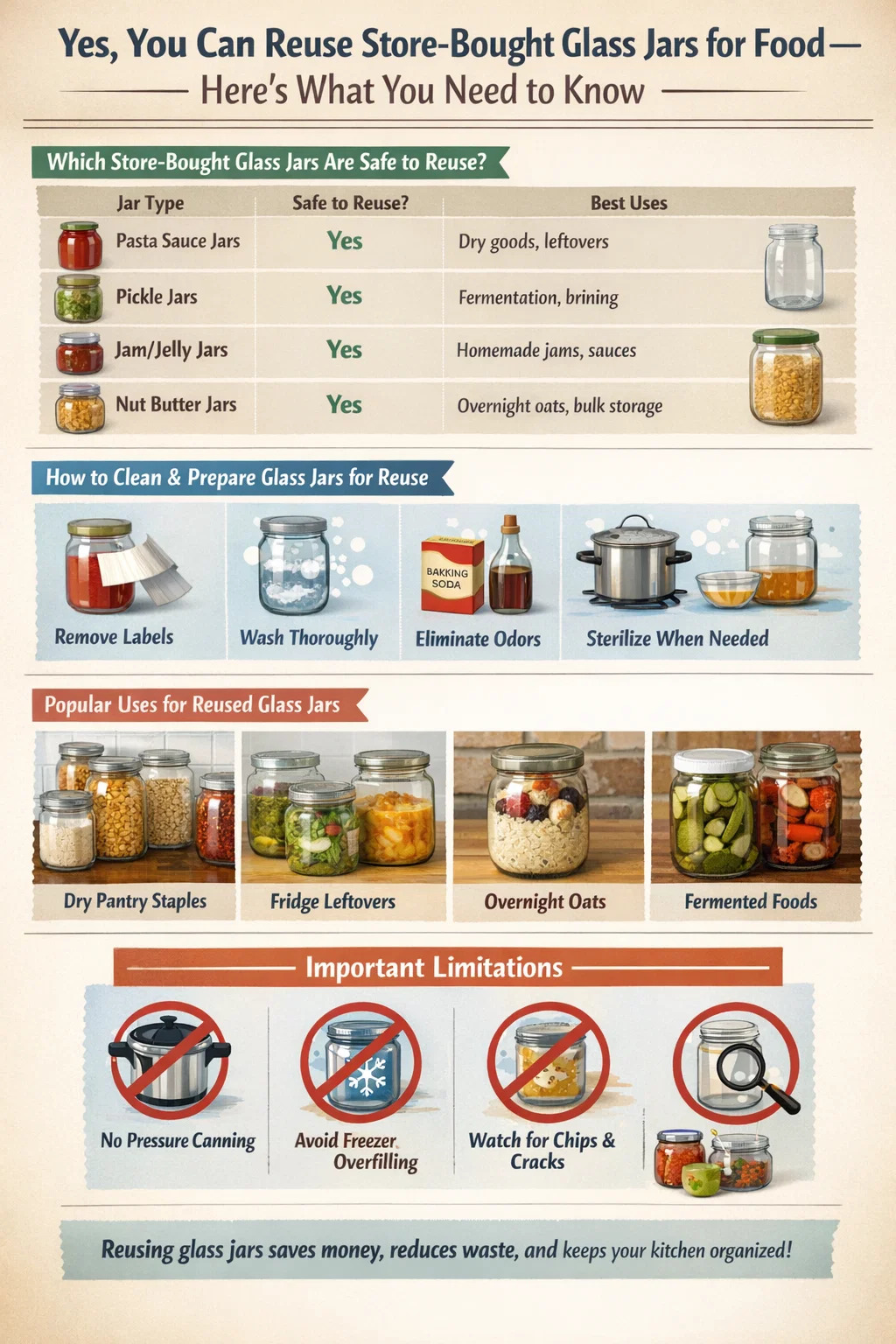
- 1 Yes, You Can Reuse Store-Bought Glass Jars for Food — Here's What You Need to Know
- 2 Which Store-Bought Glass Jars Are Safe to Reuse for Food
- 3 How to Properly Clean and Prepare Glass Jars for Reuse
- 4 What People Actually Use Reused Glass Jars For in the Kitchen
- 5 Important Limitations: When Not to Reuse Store-Bought Glass Jars
- 6 Why People Who Reuse Glass Jars Stick With the Habit
- 7 Tips for Getting the Most Out of Your Reused Glass Jars
- 8 Beyond Food: Other Ways People Use Reused Glass Jars Around the Home
Yes, You Can Reuse Store-Bought Glass Jars for Food — Here's What You Need to Know
The short answer is yes — most store-bought glass jars can be safely reused for food storage, as long as you clean and prepare them properly. Glass is non-porous, doesn't absorb odors or flavors, and doesn't leach chemicals into food the way some plastics can. That makes it one of the best materials for storing everything from dry goods to fermented foods. However, not every glass jar is suitable for every purpose, and knowing the difference matters if you want to stay safe and get the most out of your jars.
Millions of people around the world already reuse glass jars from pasta sauce, pickles, jam, mustard, coconut oil, and other grocery products. It's a practical, low-cost habit that reduces plastic waste and keeps your kitchen organized. But there are right and wrong ways to go about it.
Which Store-Bought Glass Jars Are Safe to Reuse for Food
Not all glass jars are created equal. The ones most suitable for food reuse are those that originally contained food themselves, since they were manufactured to food-safe standards. Here's a breakdown of common types:
| Jar Type | Safe to Reuse? | Best Uses | Notes |
|---|---|---|---|
| Pasta sauce jars | Yes | Dry goods, leftovers, soups | Wide mouth is very convenient |
| Pickle jars | Yes | Fermentation, brining, storing liquids | Rinse thoroughly to remove brine smell |
| Jam/jelly jars | Yes | Homemade jams, sauces, dressings | Not suitable for pressure canning |
| Salsa jars | Yes | Refrigerator storage, batch cooking | Check lid seal before reusing |
| Nut butter jars | Yes | Overnight oats, snacks, bulk storage | Wide mouth makes cleaning easy |
| Coconut oil jars | Yes | Herbs, spices, cooking fats | Usually thick, high-quality glass |
| Mustard or condiment jars | Yes | Drinking glasses, small portions | Often used as drinking glasses in France |
Jars that originally held non-food products — like candles, paint, or chemicals — should never be used for food, even after washing. Residues can remain even after thorough cleaning, and the glass itself may not meet food-contact safety standards.
How to Properly Clean and Prepare Glass Jars for Reuse
Cleaning glass jars correctly is the foundation of safe food reuse. Skipping steps here can lead to contamination, off-flavors, or spoiled food. Follow this process every time:
Step 1: Remove Labels Completely
Soak the jar in warm water for 10–15 minutes to loosen the label. Most paper labels peel right off. For stubborn adhesive residue, rub it with a small amount of cooking oil or use a product like Goo Gone. Make sure no glue residue remains before washing, as it can harbor bacteria.
Step 2: Wash Thoroughly with Hot Soapy Water
Use hot water and dish soap to scrub both the inside and outside of the jar. A bottle brush is especially useful for narrow-mouth jars. Pay particular attention to the threads around the rim where food particles and bacteria can hide. Rinse well — soap residue can affect the taste of stored food.
Step 3: Eliminate Lingering Odors
Some jars — especially those that held pickles, garlic, or strong sauces — can retain odors. To neutralize them, try one of these methods:
- Fill with a mixture of water and baking soda (1 tablespoon per cup of water), let sit overnight, then rinse.
- Fill with a diluted white vinegar solution (1 part vinegar to 3 parts water) and let soak for several hours.
- Leave the washed, open jar in direct sunlight for a day — UV light helps break down odor-causing compounds.
Step 4: Sterilize When Needed
For everyday refrigerator use, a thorough wash is usually sufficient. But if you're storing fermented foods, homemade jams, or anything that could spoil at room temperature, sterilize the jars first. There are two common methods:
- Boiling water method: Submerge clean jars in a pot of boiling water for 10 minutes. Use tongs to remove and let air dry on a clean towel.
- Oven method: Place washed jars (without lids) upright on a baking tray and heat at 160°C (320°F) for 15 minutes. Allow to cool before filling.
Do not sterilize lids in the oven — the rubber seals can degrade at high heat. Boiling is safer for lids, though most reused lids won't form a perfect vacuum seal anyway.
Step 5: Check for Chips and Cracks
Before using any glass jar, run your finger along the rim and inspect the body for chips, cracks, or stress fractures. A chipped rim can be a bacterial trap and may cause the jar to break if exposed to temperature changes. Discard any jar that shows damage.
What People Actually Use Reused Glass Jars For in the Kitchen
People who regularly reuse glass jars tend to find more and more uses for them over time. Here are the most popular food-related uses, along with practical details:
Storing Dry Pantry Staples
Glass jars are ideal for storing dry goods like rice, pasta, lentils, oats, flour, sugar, coffee, tea, and spices. Unlike plastic bags or original cardboard packaging, glass provides an airtight seal (when the lid still fits well), keeps pests out, and lets you see exactly what's inside and how much is left. Many people who adopt a zero-waste pantry style use rows of repurposed glass jars on open shelving — it's both functional and visually organized.
A standard 700ml pasta sauce jar holds roughly 400g of rice. A larger 950ml jar is perfect for oats or granola. Smaller jars work beautifully for spices, seeds like chia or flaxseed, and baking ingredients like baking powder or vanilla sugar.
Refrigerator Meal Prep and Leftovers
Glass jars are excellent for storing cooked foods in the fridge. Soups, stews, sauces, and grains keep well in sealed jars for 3–5 days. Unlike plastic containers, glass doesn't stain from tomato-based dishes and doesn't hold onto smells. Many meal preppers use jars to portion out individual servings directly, which makes grabbing lunch quick and easy.
One popular method is layered salads in jars — dressing goes at the bottom, followed by sturdy vegetables, grains, protein, and greens on top. This keeps everything fresh for 3–4 days without the greens wilting.
Overnight Oats and Breakfast Prep
Overnight oats have become one of the most popular uses for reused glass jars. A typical recipe combines about 50g of rolled oats with 150ml of milk or a plant-based alternative, plus toppings like fruit, nut butter, or honey. You mix everything in the jar, screw on the lid, and refrigerate overnight. The jar goes straight from the fridge to work — no separate container needed.
Homemade Fermented Foods
Fermenting vegetables at home has grown significantly in popularity, and reused glass jars are widely used for this purpose. Vegetables like cabbage (for sauerkraut), cucumbers, carrots, radishes, and beets can be fermented in a basic brine of 2% salt by weight — typically 20g of non-iodized salt per liter of water. Wide-mouth pickle jars are particularly well-suited for this.
The key with fermentation in reused jars is to avoid sealing them completely during active fermentation, as pressure from CO2 can build up. Many people use a loose lid or place a cloth over the top secured with a rubber band during the first few days. Once fermentation slows, the jar can be sealed and moved to the refrigerator, where the contents keep for several months.
Infused Oils, Vinegars, and Liquors
Glass jars are perfect for infusing flavor into liquids. Common examples include garlic-infused olive oil, herb vinegar (using rosemary or tarragon), fruit-infused spirits, and homemade vanilla extract (vanilla beans in vodka). The glass doesn't react with acidic vinegars or alcohol the way metal or plastic can, making it the safest container for these uses.
Note: Garlic-in-oil preparations require care. Raw garlic in oil at room temperature can support the growth of Clostridium botulinum. Store garlic-infused oil in the refrigerator and use it within one week, or acidify it properly before storage.
Homemade Jams, Sauces, and Condiments
Pouring hot homemade jam or tomato sauce into a clean, warm glass jar and screwing on a tight lid often creates a partial vacuum seal as the jar cools. This method — sometimes called the inversion method — can extend shelf life for a few weeks in a cool pantry, though it's not as reliable as proper water-bath canning. For longer storage, use actual canning jars and proper canning techniques. Reused store-bought jars are fine for refrigerator storage of homemade condiments, but they're not recommended for long-term shelf-stable canning.
Smoothies and Drinks
Wide-mouth jars double as drinking vessels. Many cafés and restaurants already serve drinks in mason jars for this exact reason. At home, people use repurposed glass jars to store cold brew coffee, homemade lemonade, kombucha, infused water, and pre-blended smoothies. A standard jam jar holds about 300–400ml, making it just the right size for a single serving.
Bulk Buying and Zero-Waste Shopping
In cities with bulk food stores, reused glass jars are often brought in by customers to fill with grains, nuts, seeds, spices, and even liquids like olive oil or honey. The store tares the jar's weight before filling. This approach eliminates single-use packaging entirely. Even outside of bulk stores, bringing a clean jar to a deli counter or farmers market to collect fresh items is an increasingly common zero-waste practice.
Important Limitations: When Not to Reuse Store-Bought Glass Jars
While store-bought glass jars are versatile, there are situations where using them is either ineffective or unsafe:
- Pressure canning: Standard store-bought jars are not designed to withstand the pressure of a pressure canner. They can crack or shatter, and the seals are not reliable enough for low-acid foods like vegetables, meat, or beans. Use purpose-made canning jars (like Ball or Kerr) for pressure canning.
- Freezing liquids: Filling a glass jar with liquid and placing it in the freezer can cause the glass to crack as the liquid expands. If you want to freeze in glass, leave at least 2–3cm of headspace and use straight-sided jars rather than those with a shoulder (the narrowing near the top). Even then, there is some risk.
- Thermal shock: Pouring boiling liquid into a cold jar or placing a hot jar in cold water can cause it to crack. Always warm a jar before adding hot content — place it in warm water first, or let it sit on the counter to reach room temperature.
- Reusing lids multiple times: The rubber seals inside metal lids can degrade after repeated heating and cooling cycles. After washing and drying, check that the seal is still pliable and has no deformities. For fermentation or any food where a good seal matters, replace lids regularly.
Why People Who Reuse Glass Jars Stick With the Habit
People who start reusing glass jars rarely stop. The habit tends to grow once you realize how many problems it solves at once. Here's what keeps people committed:
Cost Savings Are Real and Ongoing
A set of purpose-made glass food storage containers can cost anywhere from $30 to over $100. A household that regularly buys pasta sauce, pickles, and jam accumulates usable glass jars for free. Over a year of regular grocery shopping, a single household can accumulate 30–50 quality glass jars without spending a cent on containers.
Glass Outperforms Plastic for Long-Term Storage
Glass doesn't absorb food odors or stains. It doesn't harbor bacteria in the material itself, unlike plastic, which can develop micro-scratches over time that trap residue. Glass also doesn't contain BPA or other plasticizers that can leach into food, especially when heated. For people who store oily or acidic foods — tomato sauce, citrus-based dressings, pickled vegetables — glass is genuinely the better material.
Environmental Impact Is Meaningful
Glass is infinitely recyclable, but recycling still requires energy and resources. Reusing glass jars before recycling them is a step further up the waste hierarchy. A single glass jar reused 20 times before being recycled has dramatically less environmental impact per use than a single-use plastic container. For households trying to reduce waste, reusing glass jars is one of the most practical and immediate actions available.
Kitchen Organization Becomes Easier
Switching from a mix of plastic bags, zip-lock pouches, and cardboard packaging to uniform glass jars transforms pantry and fridge organization. You can see what's inside without opening anything, everything fits neatly, and you always know when you're running low. Many people report that this visual clarity reduces food waste because they're more aware of what they have.
Tips for Getting the Most Out of Your Reused Glass Jars
A few practical strategies make the whole system work better:
- Label each jar with masking tape and a marker. Include the contents and date. This takes five seconds and prevents the mystery-jar problem in the back of the fridge.
- Keep lids with their matching jars. Mismatched lids are frustrating and often don't seal properly. Store jars with lids loosely placed on top if space is an issue.
- Standardize where you can. If you regularly buy the same brand of pasta sauce or pickles, you'll accumulate uniform jars that stack and store neatly.
- Keep a small collection of different sizes. Small jars (under 300ml) for spices and sauces, medium jars (300–700ml) for single portions and meal prep, and large jars (700ml+) for bulk dry goods.
- When a jar becomes cloudy from hard water deposits, soak it in a solution of equal parts water and white vinegar for an hour, then rinse. The cloudiness disappears and the jar looks new.
- Don't hoard more than you actually use. A collection of 20–30 jars in regular rotation is practical. A collection of 200 jars stacked in a cupboard that you never use is just clutter.
Beyond Food: Other Ways People Use Reused Glass Jars Around the Home
While this article focuses primarily on food uses, it's worth acknowledging that people who reuse glass jars often extend the practice well beyond the kitchen. Jars become pencil holders, plant propagation vessels, candle containers, bathroom organizers for cotton balls and q-tips, and small vases. These non-food uses are a perfectly good second life for jars that are too small, have slight lid issues, or have been in circulation long enough that you want to retire them from food storage.
The point is that a store-bought glass jar, which would otherwise be recycled or sent to landfill after a single use, has a remarkably long and useful life if you put in a small amount of effort. Clean it properly, use it for the right purpose, and check it for damage periodically — that's all it takes to get years of value from something that cost you nothing extra.
Recommended Products


- PRODUCT
- Glass Storage Jar
- Glass/Stainless Steel Drinking ware
- Kitchen Seasoning Containers
- Home Decoration
- QUICK LINKS
- Products
- About Us
- Manufacture
- ODM/OEM
- News
- Contact Us
- CONTACT US
-
-
 7 Crystal Boulevard xi’an Feng Town, Baoying County,Jiangsu, China.
 -
 WhatsApp:
+86-15005252638 -
 +86-15005252638
+86-18083766162
+86-15895746638
+86-0514-8866-8898
-
 joy@nchousewares.com
Jack@nchousewares.com
julia@nchousewares.com
-
- CONTACT

